

 English
 Español
 عربى
The large vertical HVLS floor-standing ventilation fan offers a variety of color options, allowing users to choose the most suitable color based on different environments and decoration needs. This c...
Content
A 6,800 m² factory floor used to be ventilated by roughly 300 small wall and pedestal fans. Six large ceiling fans now cover the same area, and in the manufacturer's own comparison that change cuts more than one million kWh of electricity a year, a reduction of about 93% in the running cost of moving air. Read the figure as a vendor claim rather than a guarantee, but the principle behind it holds: in a large space, a few slow, wide fans move air more evenly, and far more cheaply, than a swarm of small fast ones.
The difficult part is not deciding that you need large fans. It is matching diameter, mounting height, motor type and control strategy to a building that may contain racking, crane rails, mezzanines and a roof structure never designed to carry anything extra. The sizing logic below is the part that survives contact with a real project.
Three numbers decide most of the specification: the floor area you actually want to ventilate, the clear height from floor to the lowest obstruction, and the way the volume is divided. A 20,000 m² warehouse with 12 m of clear height behaves nothing like the same area split into low-bay workshops, even though the square footage is identical.
A fan selected for the total footprint but installed in one half of a divided building will not deliver its rated coverage. Sizing section by section usually costs less than one oversized installation that never quite performs.
Diameter sets coverage. Industrial ceiling fan ranges typically run from about 7 ft to 28 ft, and the bands below map that span onto floor area, mounting height and building type. Treat them as planning ranges, then confirm the numbers against airflow data for the individual product.
| Blade diameter | Footprint per unit | Usable mounting height | Where it fits |
|---|---|---|---|
| 7–11 ft | 100–250 m² | 3.0–4.5 m | Small workshops, retail, mezzanines, low bays |
| 12–16 ft | 250–600 m² | 4.0–6.0 m | Assembly halls, packaging lines, mid-size warehouses |
| 17–24 ft | 600–1,200 m² | 5.0–8.0 m | Distribution centres, production bays, hangars |
| 26–28 ft | 1,200 m² and above | 7 m and above | High-bay plants, large logistics halls, open industrial sheds |
The top of the range exists for a reason. A 28 ft unit is built for high-bay halls where smaller fans would have to be repeated dozens of times, and where the air has to travel far enough to still be moving when it reaches the floor.
Between 17 and 24 ft, blade material and blade count start to matter as much as diameter. Aluminium or aviation-grade metal blades hold their shape over a long span while staying light enough for the structure to carry, and six-blade designs trade a little peak airflow for smoother, quieter delivery.
Below 12 ft, the fan becomes a bay-level tool rather than a whole-building one. That is not a weakness; it is how you handle a workshop with partitions, a mezzanine office, or heavy racking that breaks up the airflow.
Two ceiling fans of the same diameter can differ noticeably in power draw depending on the drive behind them. Permanent magnet synchronous motors hold efficiency across a wide speed range and are the usual choice at large diameters, where torque is high and the fan spends most of its life below full speed. Brushless DC drives do a similar job at smaller diameters and lower torque, and suit mid-size halls and commercial ceilings where quiet running and fine speed control matter more than pulling power.
Direct-drive designs remove the gearbox altogether, which removes oil changes and one of the more common mechanical failure points in older industrial fans. When you compare quotes, ask for input power at the speed the fan will actually run at, not just the peak figure on the nameplate, and ask how dust build-up on the blades affects it. Our guide to large commercial fan selection sets out how those trade-offs shift across diameters and motor types.
A large fan turns slowly and pushes a wide, shallow column of air downward. The column spreads across the floor and returns along the walls, which is what produces the steady, low-velocity movement people describe as natural. Small high-speed fans create fast local jets that lose energy within a few metres, so a big open floor can absorb hundreds of them and still feel uneven: strong draughts near the fan, still air twenty metres away.
The question is not how fast the blades turn, but whether the air is still moving when it reaches the floor.
Coverage, not airflow volume, should therefore drive the specification. Planning guides commonly aim for a gentle air speed at occupied level, roughly 0.5 to 1.5 m/s depending on the season and the work being done, and the fan count then follows from the area that has to reach that speed.
Two clearances drive the installation: blade tip to the nearest obstruction, and blade plane to the floor. Leave a working gap between blade tips and structure so the fan can flex and be serviced, and keep the blades high enough that a forklift mast or a raised load cannot reach them. Where clearance is tight, reduce the diameter rather than lowering the fan into the traffic zone.
Grouping fans by zone lets you run only the areas that are occupied, and that is where most of the energy saving comes from. Variable speed drives let the same fan serve a mild spring day and a heatwave without switching between off and full power.
Low clear height, temporary structures, shielded work bays and outdoor loading areas do not suit ceiling-mounted units. Mobile and wall-mounted fans cover that ground. A four-wheel stand fan can be rolled to the bay that needs air on a given shift, and it adds ventilation without touching the roof structure at all.
Wall-mounted industrial fans suit bays where ductwork or lighting has taken up the ceiling, and pedestal units handle seasonal or temporary areas. They stay supplements, though: a portable fan moves air where it stands, not across a thousand square metres.
Most disappointing installations trace back to a quote that was too thin. Whatever the brand, the specification should answer these points before the order is placed.
Measure the building in sections and note the clear height above each one. Band the diameters against that area and height, then confirm the structure can take the load and the vibration. Choose the motor type on running hours and the speed range you need, and plan zoning so fans follow occupancy rather than the calendar. Buy one zone first, measure the result at floor level, and scale the rest of the building from evidence instead of a brochure.
The order matters: coverage first, then mounting, then motor efficiency, then controls. Getting that sequence right is what turns a large space from a ventilation problem into a background condition nobody thinks about. If you want the numbers checked against a specific building, talk to the manufacturer about your building layout before committing to a diameter.
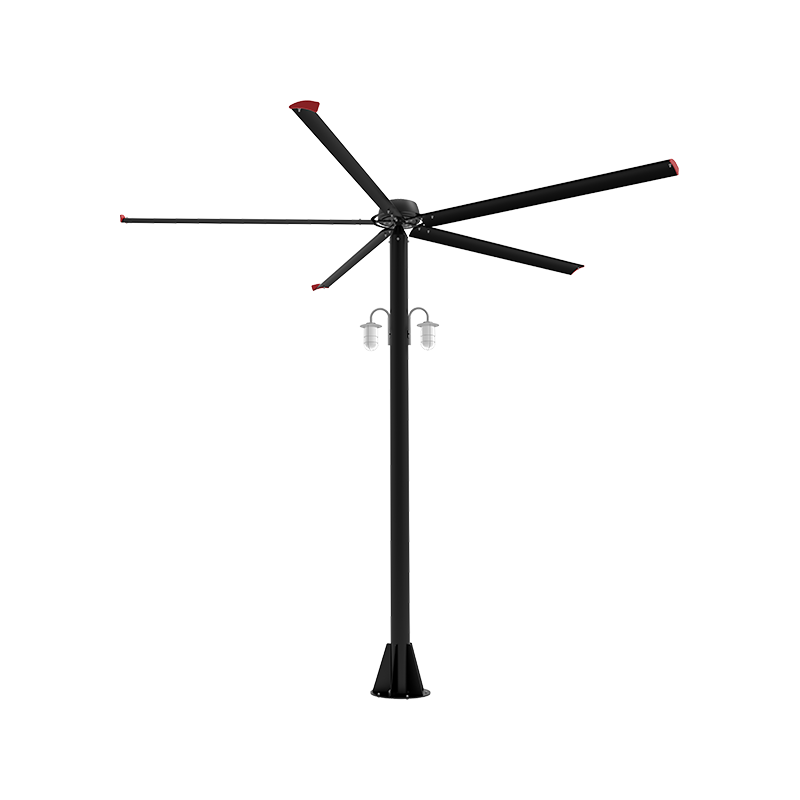
The large vertical HVLS floor-standing ventilation fan offers a variety of color options, allowing users to choose the most suitable color based on different environments and decoration needs. This c...
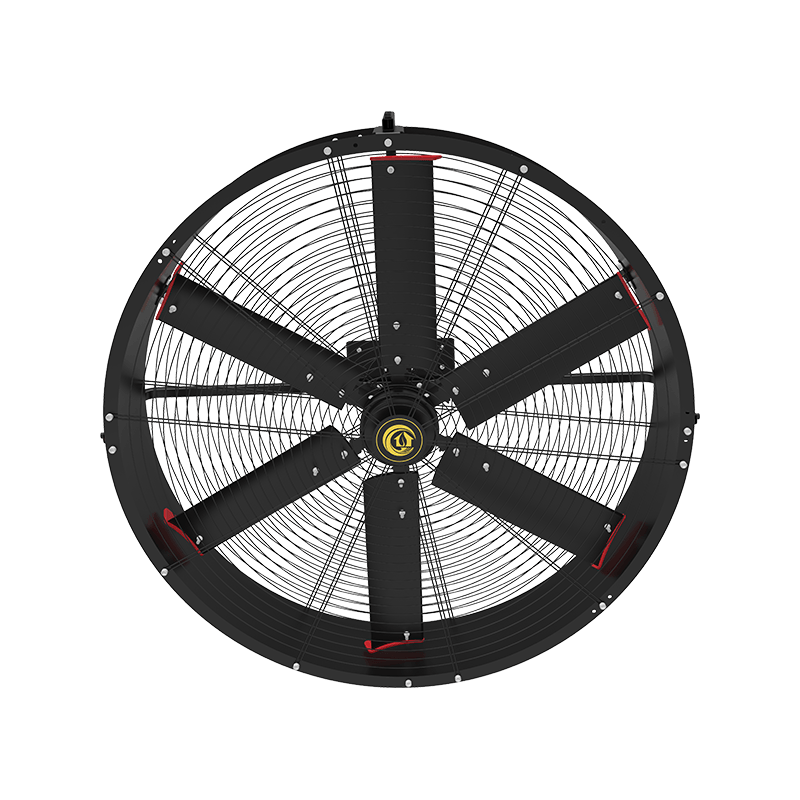
1. Extreme Airflow & Wide CoverageEquipped with massive 79-inch (2.0m) diameter aerospace-grade aluminum alloy blades. These precision-balanced blades generate a powerful, stable laminar airflow t...

The aluminum alloy blade HVLS industrial vertical fan has a power consumption of 350 watts, demonstrating its energy efficiency. Compared to traditional high-speed fans, HVLS fans operate at low speed...
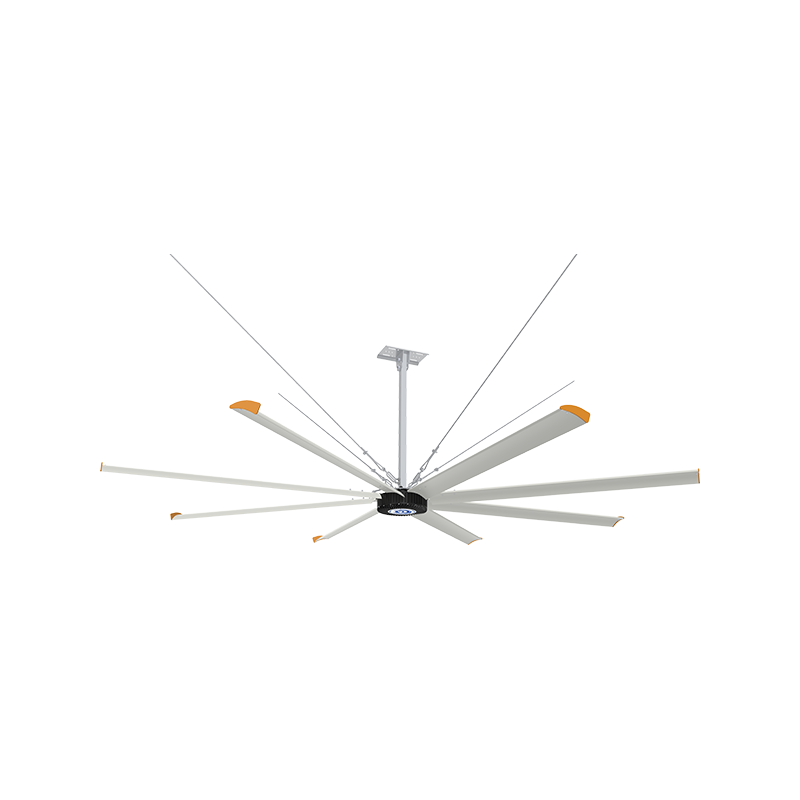
The 10-foot DC motor-driven HVLS (High Volume Low Speed) industrial and commercial ceiling fan utilizes a low-speed, high-airflow operating principle, achieving uniform airflow over a large area and a...

The 7-foot HVLS ceiling fan for small workshops is a high-efficiency ventilation device designed specifically for industrial workshops, warehouses, and small production lines. It features high-qualit...
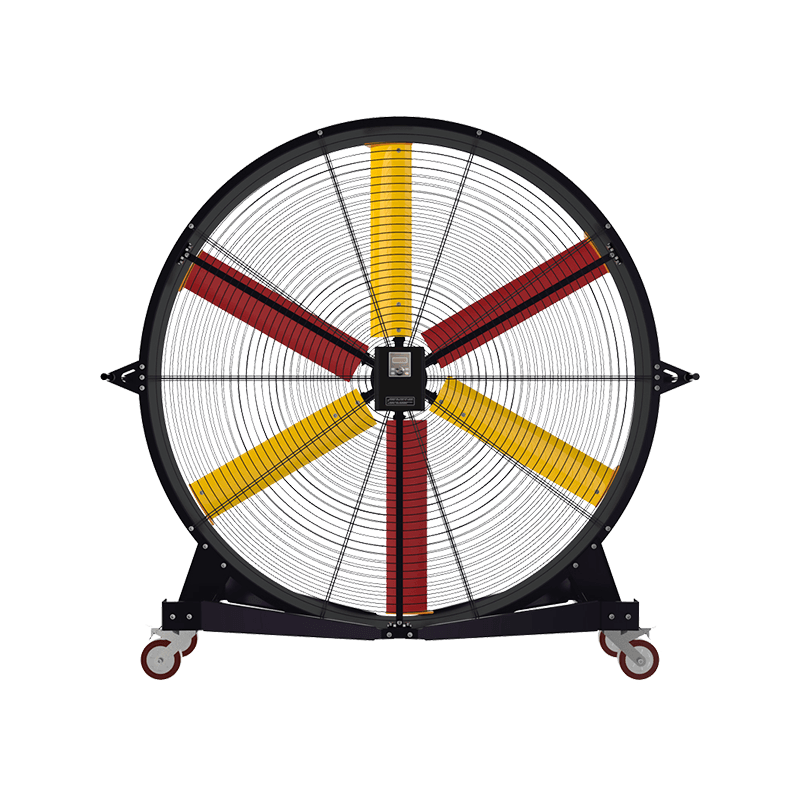
The 2-meter 4-wheel movable large floor-standing HVLS fan utilizes larger blades and a lower rotational speed, enabling it to generate a large volume of airflow while maintaining low noise levels. The...
Specifying industrial air movement The HVLS Ceiling Fan Isn’t a Big Ceiling Fan. Sizing, motor selection, and mounting height have to work together before a large industrial space can feel genuinely...
READ MORELarge-space air movement Big Commercial Fans: How to Size, Mount and Power Them One 24 ft ceiling fan can replace forty pedestal units, but only when span, mounting height and motor match the buildin...
READ MOREStanding on the floor of a 6,000-square-metre factory on a hot July afternoon, you quickly notice the problem: small ceiling fans running at full speed create noisy air pockets near the floor, while ...
READ MOREGymnasium Ceiling Fans: Why Standard Fan Logic Stops at the Door A hall with twelve metres of air above the court is not simply a bigger room. It is a different airflow problem, and it is solved with...
READ MORE Custom Large Industrial Fans Manufacturers