

 English
 Español
 عربى
1. Extreme Airflow & Wide CoverageEquipped with massive 79-inch (2.0m) diameter aerospace-grade aluminum alloy blades. These precision-balanced blades generate a powerful, stable laminar airflow t...
Content
Large-space air movement
One 24 ft ceiling fan can replace forty pedestal units, but only when span, mounting height and motor match the building. Here is the order of decisions that keeps a large floor cool without a second order.
Start with arithmetic, not product photography. Aipu Fans, a Shanghai manufacturer of industrial ceiling fans, compares a 6,800 sq m workshop served by six 7.3 m HVLS fans with the same floor cooled by 300 small pedestal fans: the large-fan layout saves more than one million kWh a year and roughly 93% of the electricity cost.
The figure comes from the supplier rather than an independent audit, so read it as an illustration, not a guarantee. The mechanism behind it is sound, and it explains why big commercial fans are specified by floor coverage instead of blade count.
Sizing language in this category is inconsistent. Retail listings call a 30 inch drum fan "large", while ceiling-fan suppliers start at 6 ft and stop at 28 ft. The practical dividing line is whether the fan conditions a whole floor or one workstation. Below roughly 3 m blade diameter you are buying a local cooling tool; from 7 ft upward you are buying coverage, and coverage carries the price.
Diameter and speed move in opposite directions. A 24 ft fan turns at 45–60 rpm and pushes a slow air column 1–3 m deep that spreads outward across the floor, while a 30 inch drum fan spins above 1,000 rpm and delivers a fast, narrow jet that dies within a few metres.
| Blade diameter | Mounting height | Floor area per fan | Typical space |
|---|---|---|---|
| 7–11 ft (2.1–3.4 m) | 3–4.5 m | 150–250 sq m | Small workshops, retail floors, mezzanines |
| 12–16 ft (3.7–4.9 m) | 4.5–6 m | 300–450 sq m | Warehouses, gyms, light assembly, loading bays |
| 17–24 ft (5.2–7.3 m) | 6–9 m | 500–800 sq m | Production halls, distribution centres, hangars |
| 26–28 ft (7.9–8.5 m) | 9–12 m | 900–1,100 sq m | Big-box logistics, aircraft hangars, tall sheds |
Treat those numbers as planning ranges, not promises. Coverage claims assume an open floor and a fan mounted at least 0.6 m below the roof deck. Tall racking, mezzanine slabs and an open 4 m roller door that gives air an easy exit can cut effective coverage by a third, which is why one spare fan in the specification usually costs less than re-engineering the airflow later.
Four product families cover commercial floors, and they are not interchangeable. Matching the wrong family to a space is the most common reason a project underperforms.
High-volume, low-speed units from 7 ft to 28 ft move a wide, gentle air mass across the whole floor. They suit buildings with 4.5 m or more of clear height, and they are the only family that covers several hundred square metres per unit.
24–36 inch drum fans produce fast, noisy jets that relieve roughly one workstation each and obstruct forklift routes. They belong beside a furnace or on a dock, not in the middle of a 5,000 sq m warehouse.
Wall units fit buildings with too little height or no structural allowance for suspension; mobile and vertical pedestal fans serve temporary layouts, seasonal lines and outdoor loading areas. Both are spot tools.
Four figures do the real work in a comparison, and only one of them is usually printed large in the brochure.
Specify the floor area first, the mounting height second and the fan last. Choosing the largest diameter the budget allows is how a project ends up with one fan that is oversized for the bay and none for the aisle.
Because these fans turn slowly, drive losses and part-load efficiency matter more than peak output. Three motor options dominate the category.
| Motor | Speed control | Part-load efficiency | Notes | Best fit |
|---|---|---|---|---|
| AC induction | Stepped or single speed | Lower | Lowest purchase price, heavier frame | Short duty cycles, budget retrofits |
| PMSM | Wide range via VFD | High | Sealed, low maintenance, heavier | 17 ft and above, tall industrial halls |
| BLDC | Fine steps from an integrated controller | High | Compact, light, gentle on single-phase supply | 7–16 ft, warehouses, retail and gyms |
For a 12–16 ft unit under a mid-height ceiling, a brushless DC fan is often the pragmatic buy: efficiency holds up at part speed, where the fan spends most of its life, and starting current stays low on a single-phase supply. Above about 17 ft, blade weight and shaft length usually point to a permanent-magnet synchronous drive with a variable-frequency controller. Either way, ask for the minimum speed and the number of speed steps — a fan that only runs flat out wastes the efficiency you paid for.
Two clearances decide how well a big fan performs. Blade tips need at least 300 mm of free space from any structure, and the fan should sit far enough below the roof deck to avoid dragging the hottest air layer down into the workspace. Spacing between fans matters too: overlapping airflow by about 10–15% of blade diameter clears dead corners without wasting air on an area that is already moving.
Air always takes the easiest path out of a building, so inspect openings before ordering. Open roller doors, roof vents and extraction systems pull moving air away from the people it was meant to cool; where extraction is strong, plan the layout around that flow rather than against it.
Installation risk
A suspension point carries more than the weight of the fan. A large HVLS unit at full speed imposes a dynamic load several times its static mass, continuously. Ask the supplier for a signed mounting calculation and hand the dynamic load figure to the structural engineer before fabrication starts.
Not every commercial floor is a factory. Showrooms, gyms, cafés and covered walkways need 1.5–3 m blades that read as part of the interior rather than as plant equipment. The priorities shift as well: noise and appearance move up, coverage per unit falls to 60–150 sq m, and the control interface becomes a genuine requirement — multiple speeds and remote or wall control instead of a single isolator switch. The sizing logic does not change, so measure usable height, mark obstructions and then choose a diameter. Browse the commercial ceiling fan range to see how 1.5 m to 3 m units are configured for lighter, more finished spaces.
For dealers and OEM buyers
Request the same figures in datasheet form, including the motor's part-load curve. Volume pricing rarely compensates for a fan that is one diameter out of range; a longer walkthrough of efficiency and selection sits in this large commercial fan selection guide.
The installations that work share a pattern: fewer, larger fans running slowly for long hours, mounted where the moving air actually reaches people. A 6,800 sq m workshop is not cooled by 300 small fans working harder; it is cooled by six large ones working gently, and the electricity meter usually confirms it within the first cooling season.
The short version
Start with coverage, then height, then motor. Get those three in the right order and the rest of the specification, from controller to spare capacity, tends to fall into place on its own.
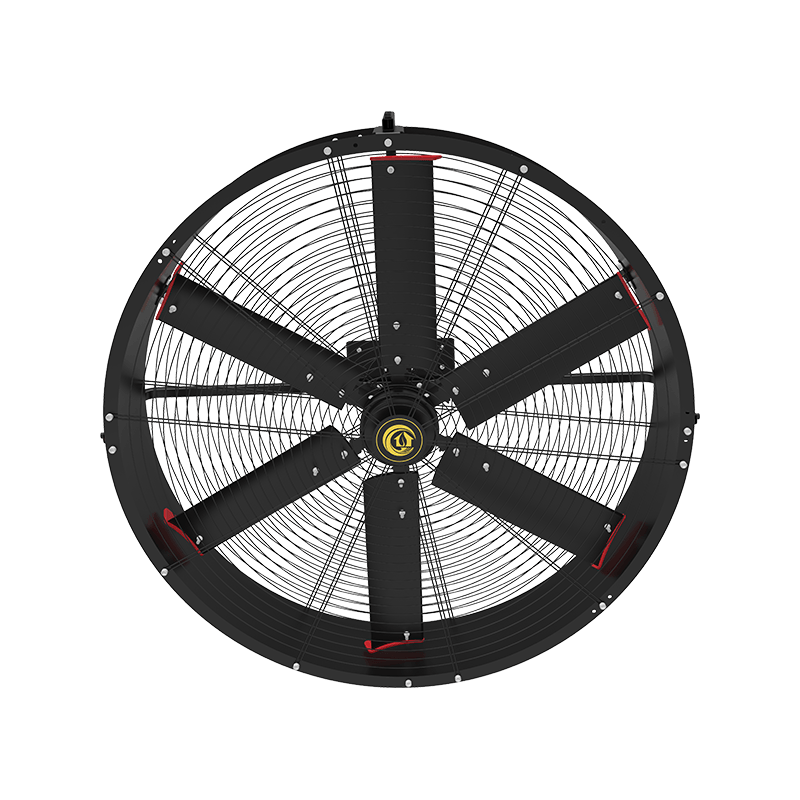
1. Extreme Airflow & Wide CoverageEquipped with massive 79-inch (2.0m) diameter aerospace-grade aluminum alloy blades. These precision-balanced blades generate a powerful, stable laminar airflow t...
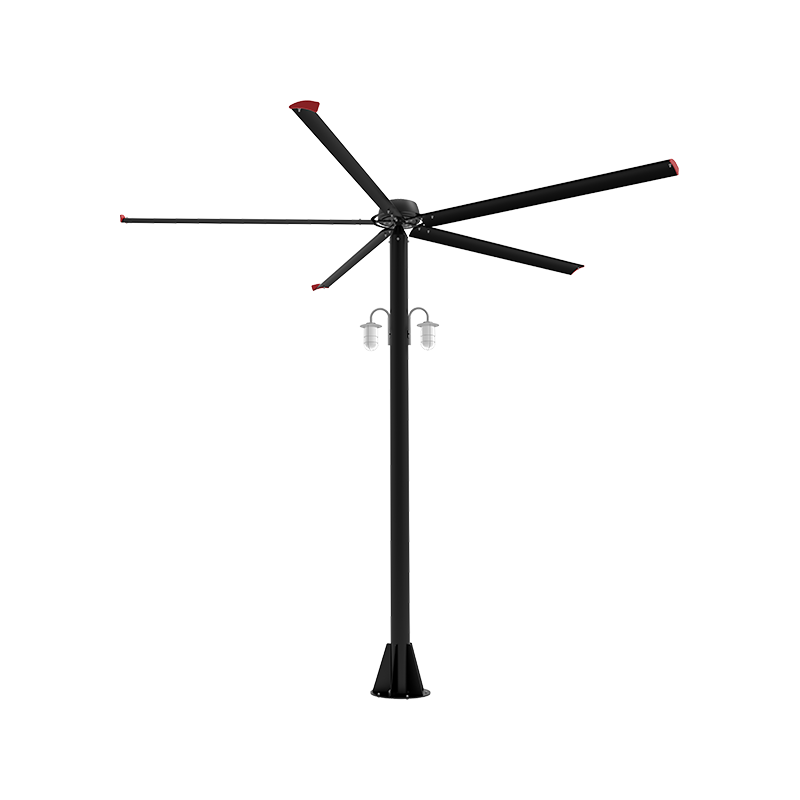
The large vertical HVLS floor-standing ventilation fan offers a variety of color options, allowing users to choose the most suitable color based on different environments and decoration needs. This c...
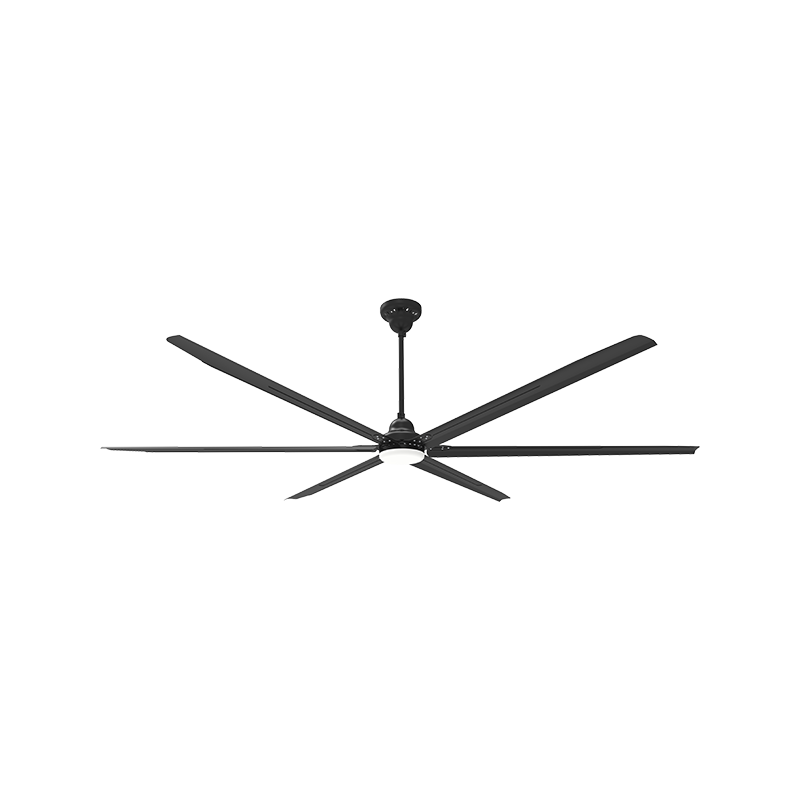
1. Core Technology: High Volume, Low SpeedNatural Breezes: Unlike the “harsh” wind from small fans, HVLS fans use massive blades rotating at low speeds to create a large-scale, three-dimensional breez...
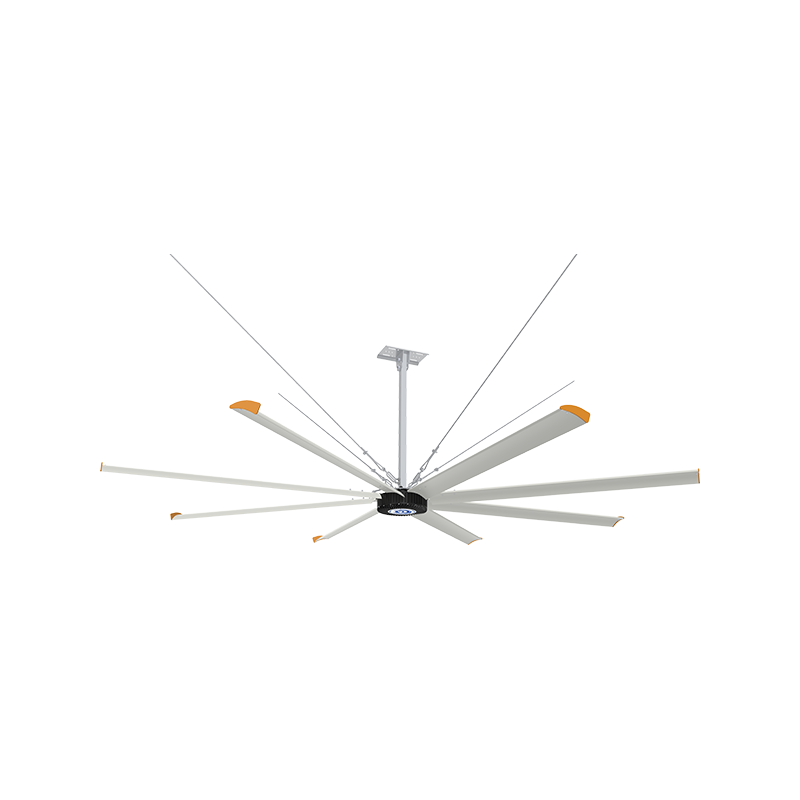
The 10-foot DC motor-driven HVLS (High Volume Low Speed) industrial and commercial ceiling fan utilizes a low-speed, high-airflow operating principle, achieving uniform airflow over a large area and a...
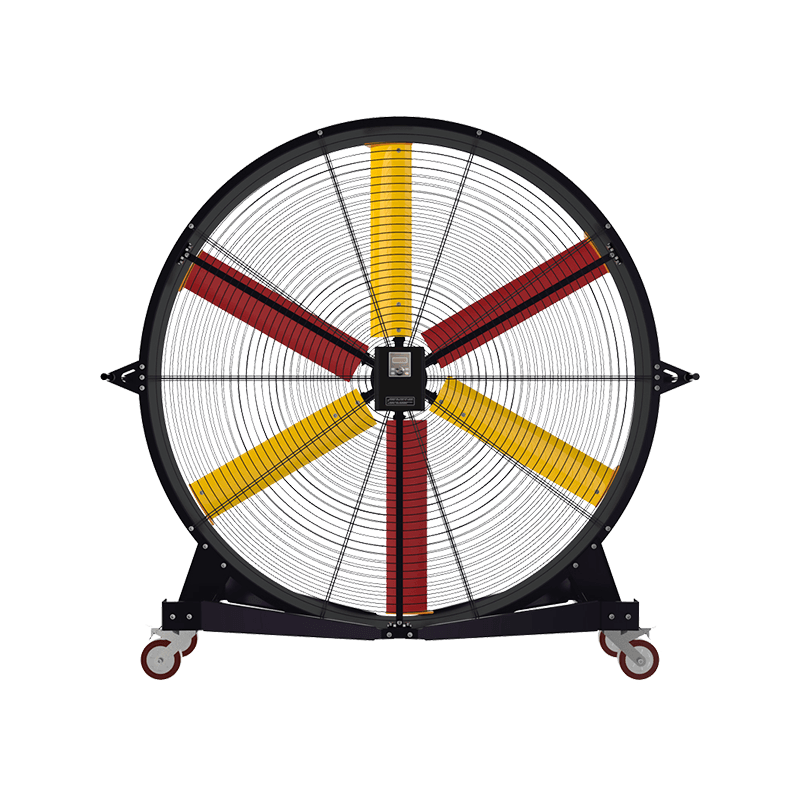
The 2-meter 4-wheel movable large floor-standing HVLS fan utilizes larger blades and a lower rotational speed, enabling it to generate a large volume of airflow while maintaining low noise levels. The...

The 7-foot permanent magnet synchronous DC motor large mobile outdoor industrial floor fan features a design with 5 or 6 fan blades. The blade dimensions are carefully calculated to ensure maximum air...
A 6,800 m² factory floor used to be ventilated by roughly 300 small wall and pedestal fans. Six large ceiling fans now cover the same area, and in the manufacturer's own comparison that change cuts m...
READ MOREStanding on the floor of a 6,000-square-metre factory on a hot July afternoon, you quickly notice the problem: small ceiling fans running at full speed create noisy air pockets near the floor, while ...
READ MORECommercial HVLS Fans: The Quiet Engineering Behind Large-Space Airflow A practical guide to selecting high-volume, low-speed ceiling fans for warehouses, factories, and commercial halls — with the ef...
READ MOREAt a distribution center in a hot climate, the worst heat gathers near the loading dock. The bay doors stay open through most of the shift, so any air that moves toward the dock gets pulled outside b...
READ MORE Custom Large Industrial Fans Manufacturers