

 English
 Español
 عربى
The 15-foot Even Airflow Industrial BLDC Ceiling Fan utilizes a high-efficiency BLDC motor and carefully designed blades. This ceiling fan operates with extremely low noise levels, making it suitable ...
Content
A hall with twelve metres of air above the court is not simply a bigger room. It is a different airflow problem, and it is solved with fewer, larger, slower fans.
A coach walks the sideline of a two-court sports hall in midsummer. The floor is warm and sticky at ankle level, the upper seating deck is noticeably hotter, and the air close to the roof feels like it belongs to another building. Three small ceiling fans were installed years ago, one per bay, and they spin fast enough to be heard from the bleachers without making the court feel any different. That is the usual starting point for a gymnasium ceiling fan project: the venue is not short of fans, it is short of air movement at the right scale.
The conclusion first. For most gymnasiums, the correct answer is a small number of large-diameter, low-speed ceiling fans running continuously, sized from ceiling height and hall volume rather than floor area alone. Small high-speed fans move air in tight circles around themselves. High-volume, low-speed units push a slow column of air down to the floor, where it spreads outward and returns to the ceiling, mixing the whole room instead of stirring one corner of it.
Three measurements decide most gymnasium fan projects: ceiling height at the lowest obstruction, the clear span between the playing surface and the nearest blade tip, and the air speed you need at roughly 1.8 m, which is head height for a standing adult.
A warehouse and a gymnasium can share a floor area and still need completely different airflow. Warehouses hold goods. Gymnasiums hold people who generate heat, move around, and notice a draught on the back of the neck in the middle of a serve. Three features change the engineering.
Warm air rises and stops there. In tall halls, the air near the ridge can sit several degrees above the air at playing level, and in winter the heat that should be keeping players comfortable is up at the roof instead. Large low-speed fans break that stratification by pulling the warm layer back down into the occupied zone. It is one of the few ventilation measures that earns its keep in both summer and winter, because the same hardware that cools in July destratifies in January.
A 7.3 m fan does not cool anything by itself. It produces a slow downward column that reaches the floor, spreads outward, and returns to the ceiling as a loop, and that loop can carry air 30 m or more from the blade. Small fans produce local turbulence within a few metres. In a hall 40 m long, the difference is between a corner that is permanently stale and a corner that is simply a corner. The same coverage behaviour applies to a workshop where a handful of large units replace rows of small ones.
Badminton, table tennis and volleyball are sensitive to moving air. Competition venues commonly want air speed inside the playing zone kept low, in some cases at or below 0.2 m/s, because a shuttle or a light ball will drift and a serve becomes unpredictable. Large slow fans are usually the only type that can mix the volume of a hall while keeping air speed at head height low enough for play.
Where that leaves the design:
Sizing starts with height, not floor area. Diameter is really a way of describing how far the downward jet travels before it disperses. A large fan turning slowly throws air further and over a wider footprint than a small fan turning fast, which is why a compact unit hung close to a 12 m roof mainly stirs the top of the room while the players below feel nothing.
| Hall type | Typical ceiling height | Fan diameter | Typical fan count |
|---|---|---|---|
| Single-court school gym | 6 to 8 m | 3.6 to 4.6 m (12 to 15 ft) | 2 to 3 |
| Two-court sports hall | 8 to 10 m | 4.6 to 5.5 m (15 to 18 ft) | 3 to 4 |
| Multi-court fieldhouse | 10 to 14 m | 6.1 to 7.3 m (20 to 24 ft) | 4 to 6 |
| Competition arena or exhibition hall | Over 14 m | 7.3 to 8.5 m (24 to 28 ft) | 6 or more |
The 17 ft to 24 ft band covers most two-court and multi-court halls, while 12 ft to 16 ft units suit single-court school gyms where the ceiling is lower and the playing area tighter. The trap is choosing diameter from floor area alone. Two halls of 1,200 square metres can need different fans if one has a 7 m ceiling and the other 13 m, because mount height decides how much of the air column reaches the floor before it spreads. A quick check is to sketch the coverage circles at floor level and look for gaps behind the baskets, along the baseline stands and in the corners.
In a gymnasium the fan runs for hours at partial speed, so the motor and drive matter more than the peak output printed on a specification sheet. Direct-drive permanent magnet motors remove the gearbox and belts used on older industrial fans. Fewer wearing parts, no oil changes, no belt tension to check each season, and a speed range that starts well below the point where a gearbox would stall or whine.
The practical questions during selection are narrower than the label suggests. Can the controller hold constant speed as blade load changes? Does it accept a 0 to 10 V or building management signal so the venue can schedule different speeds for exams in the morning and training in the evening? Is the drive rated for continuous duty in a dusty, humid roof space, and is the control panel serviceable from the ground?
Even distribution across the court matters as much as total volume. A fan with uneven blade loading produces a column that drifts, which is awkward when the unit sits over a playing zone. Six-blade designs with consistent pitch tend to produce a more symmetric downwash, easier to place over a court without leaving dead spots behind the baskets.
Noise complaints rarely come from the fan alone. They come from tip speed and from resonance with the building. A large fan turning at 40 to 60 rpm is nearly inaudible from the bleachers. A smaller fan spinning fast enough to move the same volume of air is not, and the sound it makes sits in the range that cuts through a referee's whistle. Ask for sound pressure data measured at a stated distance, not a motor noise figure, and treat any fan sold on airflow alone with suspicion.
In a gymnasium, the fan you cannot hear and cannot feel directly on your skin is usually the one doing the most work.
Comfort follows the same logic. Slow, continuous air movement at head height feels like a light breeze rather than a draught, and it keeps working during a match when spectators are packed into the stands and heat gain climbs. The goal is not maximum air speed, it is steady air exchange across the whole volume.
Steel roof structures can resonate. If the fan and the roof share a natural frequency, the noise will appear at one specific speed and disappear at another. Test the full speed range during commissioning and lock out any setting that sets the roof humming.
Mounting is where gymnasium projects are won or lost, because the attachment point is often a triangulated steel truss that was never designed for a hanging load. Confirm the connection detail before ordering: beam clamp, welded bracket or through-bolt plate, with the load path checked against the truss node rather than a mid-span chord.
Corrosion deserves its own line. An open-air or semi-enclosed gymnasium in a humid or coastal location will attack a standard finish within a few seasons, and the cost of recoating blades in place is far higher than specifying a moisture-resistant finish at the factory.
Energy consumption scales with the number of motors, not with the volume of air being moved. Manufacturer data for large industrial fans puts one 7.3 m unit at roughly the same coverage as 45 small fans, with six large fans serving a 6,800 square metre facility where 300 small fans would otherwise be needed, saving more than a million kilowatt hours a year and cutting electricity cost by about 93 percent. Site conditions vary, but the direction of the numbers does not: fewer motors, lower total power, less maintenance across the estate.
The largest sizes suit exhibition halls, competition arenas and multi-court fieldhouses. Unit cost is higher, but cost per cubic metre of air moved per year falls sharply, and the fan count in the maintenance log drops with it.
When the project goes out to tender, these points decide whether the finished installation behaves as intended or becomes another set of fans nobody switches on.
For a broader comparison of selection criteria, efficiency and airflow behaviour in large commercial spaces, our guide to large commercial fan selection walks through the same decisions from the procurement side.
Gymnasium ceiling fans work when they are treated as part of the building's ventilation strategy rather than as an accessory added after the roof is closed. Start with height and volume, choose a small number of large slow fans, keep the air speed at head height low enough for play, and settle the mounting detail before the purchase order is signed. The result is a hall that feels three or four degrees cooler than the thermometer suggests, in summer and in winter alike.
If you are specifying a hall and want a second opinion on diameter, mounting or control, send us the dimensions, the ceiling height and a floor plan, and we will map a coverage layout for your case. You can reach the team through our contact page to discuss the details.
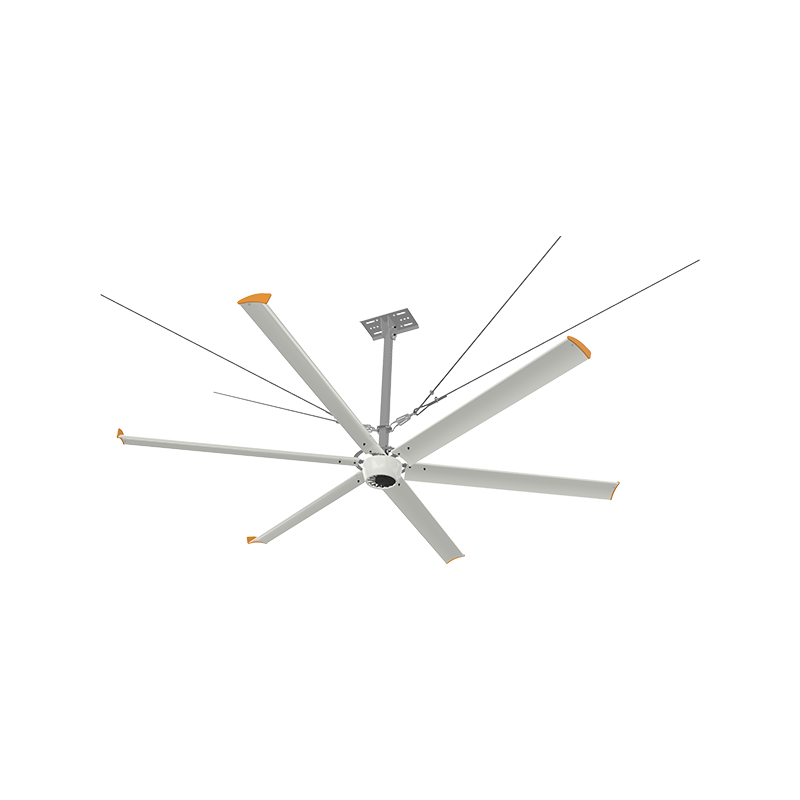
The 15-foot Even Airflow Industrial BLDC Ceiling Fan utilizes a high-efficiency BLDC motor and carefully designed blades. This ceiling fan operates with extremely low noise levels, making it suitable ...
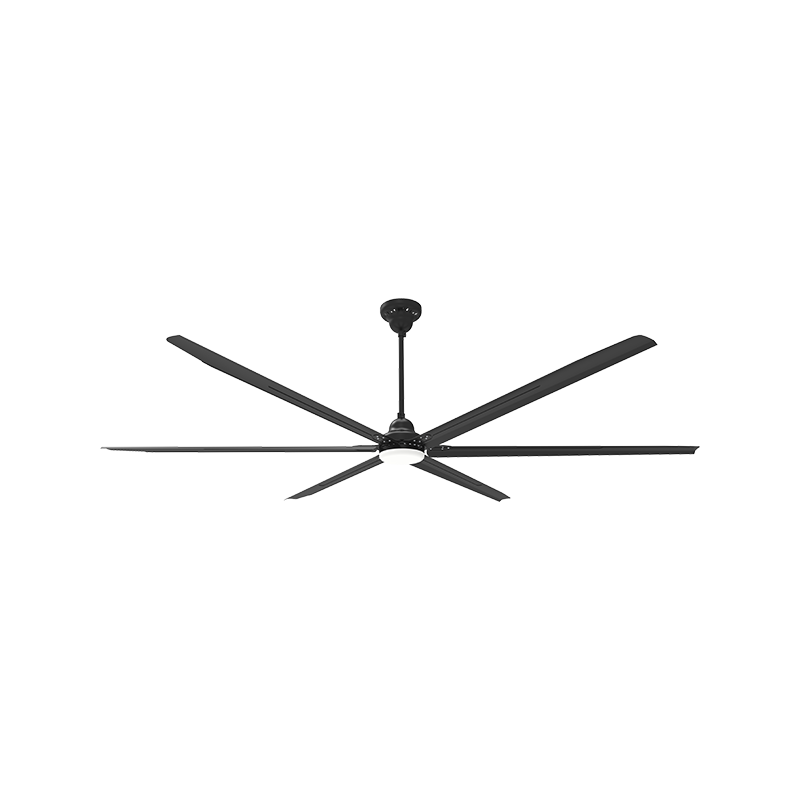
1. Massive 9-Foot WingspanWith a colossal 108-inch (2.8m) diameter and 6 high-efficiency streamlined blades, this fan moves massive volumes of air even at low speeds. It is the perfect solution for el...
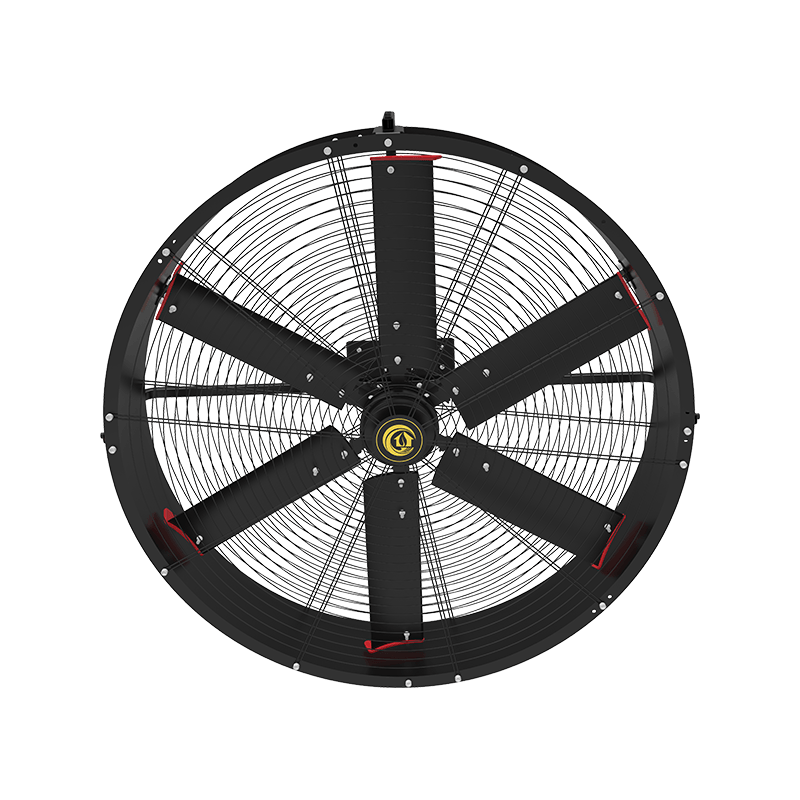
1. Extreme Airflow & Wide CoverageEquipped with massive 79-inch (2.0m) diameter aerospace-grade aluminum alloy blades. These precision-balanced blades generate a powerful, stable laminar airflow t...
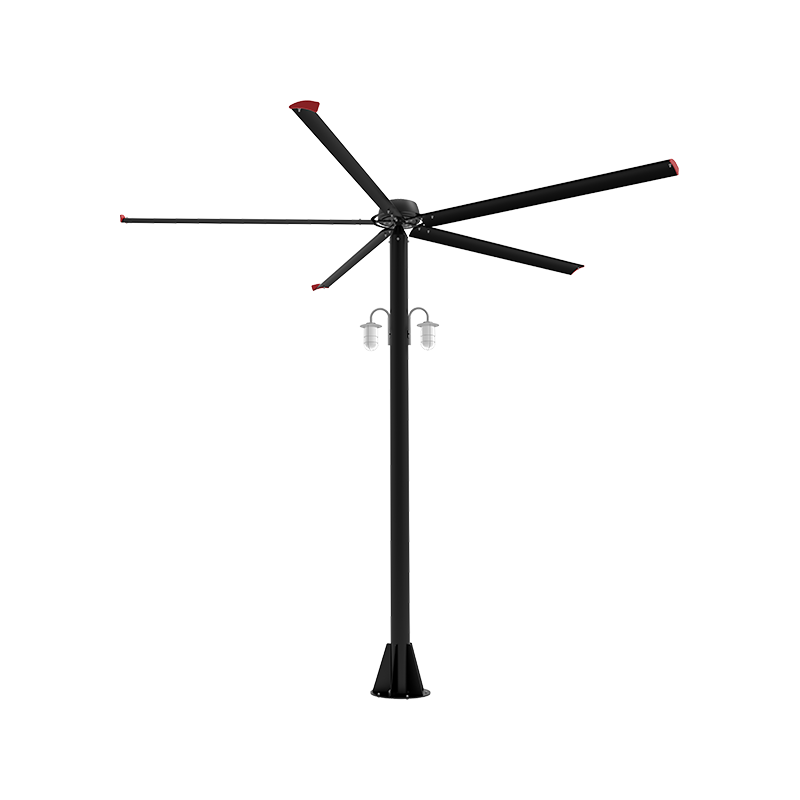
The large vertical HVLS floor-standing ventilation fan offers a variety of color options, allowing users to choose the most suitable color based on different environments and decoration needs. This c...
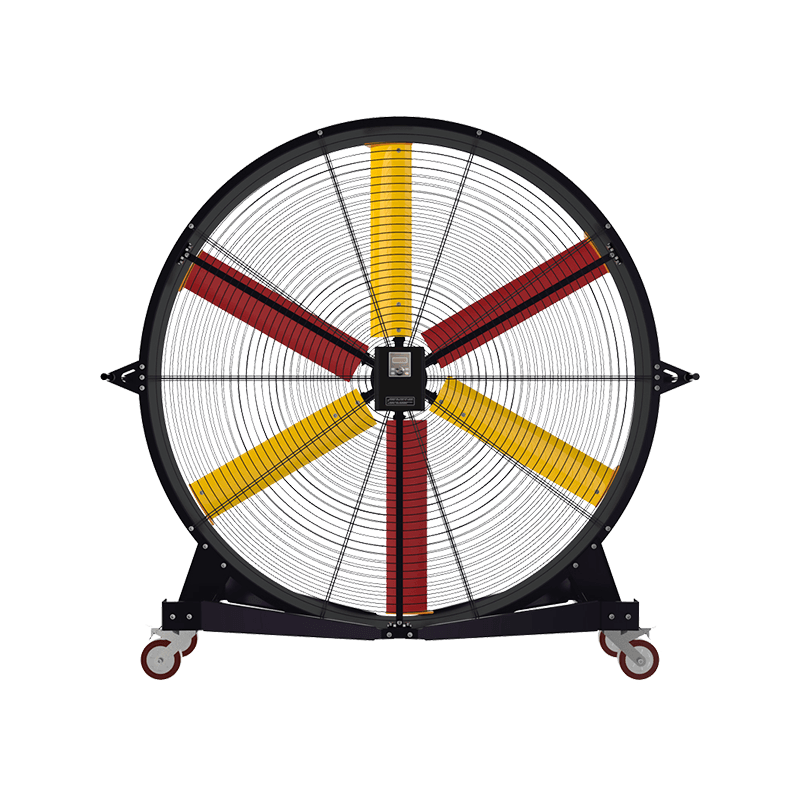
The 2-meter 4-wheel movable large floor-standing HVLS fan utilizes larger blades and a lower rotational speed, enabling it to generate a large volume of airflow while maintaining low noise levels. The...
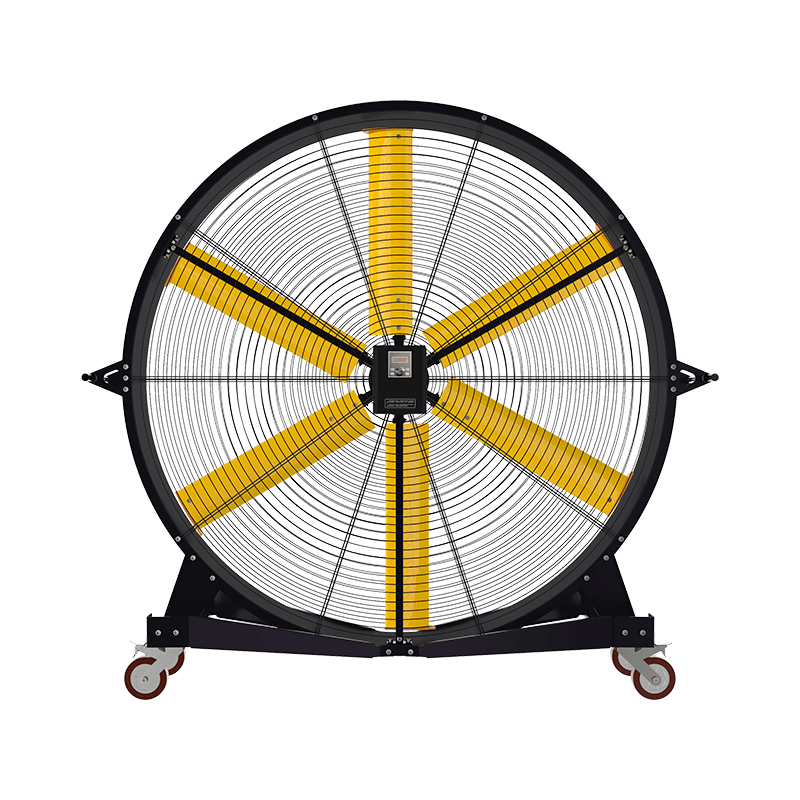
The 79-inch freestanding energy-efficient HVLS industrial fan features a robust construction designed to withstand the challenges of daily industrial use. Its impact-resistant frame ensures it can wit...
A 6,800 m² factory floor used to be ventilated by roughly 300 small wall and pedestal fans. Six large ceiling fans now cover the same area, and in the manufacturer's own comparison that change cuts m...
READ MORESpecifying industrial air movement The HVLS Ceiling Fan Isn’t a Big Ceiling Fan. Sizing, motor selection, and mounting height have to work together before a large industrial space can feel genuinely...
READ MORELarge-space air movement Big Commercial Fans: How to Size, Mount and Power Them One 24 ft ceiling fan can replace forty pedestal units, but only when span, mounting height and motor match the buildin...
READ MOREShanghai Aipu Fans Co., Ltd., established in Shanghai in 2006, focuses on manufacturing industrial-grade high-quality ceiling fans, relying on industry-leading motor technology and advanced manufactu...
READ MORE Custom Large Industrial Fans Manufacturers