

 English
 Español
 عربى
The 10-foot DC motor-driven HVLS (High Volume Low Speed) industrial and commercial ceiling fan utilizes a low-speed, high-airflow operating principle, achieving uniform airflow over a large area and a...
Content
Two warehouses can share the same floor area and still need very different fan counts. What separates a comfortable building from an expensive one is rarely the motor brand, it is the coverage calculation that happened, or did not happen, before the purchase order.
Published figures from the HVLS segment make the point quickly: six large ceiling fans covering a 6,800 m² factory, compared with roughly 300 small pedestal fans doing the same job, for an annual saving of more than one million kWh and about 93% lower ventilation electricity cost. The building did not change. The airflow strategy did.
That single example carries most of the commercial case. What follows is the decision chain behind it: how much floor a given diameter really covers, what ceiling height does to that number, which motor type changes your maintenance calendar, and where a large industrial fan is simply the wrong purchase.
The most common specification mistake in commercial ceiling fan projects is also the fastest one: divide gross floor area by a supplier's published coverage figure, round up to a whole number of fans, order. It works often enough to feel reliable, and it fails badly in exactly the buildings where failure is most expensive.
Three inputs drive the real number, and none of them is gross floor area.
Large ceiling fans move air as a wide, slow column rather than a jet, and that column needs room to form. Below roughly 3 m of blade-to-floor clearance the air arrives as a draft instead of a gentle blanket, and comfort complaints follow. Above 6 m it has space to spread, and the same diameter covers noticeably more floor.
In long warehouses and production halls, a tidy grid of fans is rarely the best layout. Overlapping circles of coverage handle racking and machinery better than evenly spaced rows, because they keep air moving through the zones people actually occupy. Controls matter just as much: grouping fans into zones with variable speed lets you run two fans in a busy aisle instead of six across an empty building.
The cheapest fan is the one you never have to switch on. Zoning and speed control usually save more energy than any single efficiency figure printed on a datasheet.
The table below is a planning reference, not a guarantee. It assumes an unobstructed space, a target air speed near 1.0 m/s in the occupied zone, and a fan running at moderate rather than maximum speed.
| Diameter | Typical blade-to-floor clearance | Planning coverage per unit | Where it usually fits |
|---|---|---|---|
| 1.8–3.4 m (6–11 ft) | 3.0–4.5 m | 65–250 m² | Retail floors, small workshops, mezzanines, back-of-house |
| 3.7–4.9 m (12–16 ft) | 3.5–6 m | 280–500 m² | Mid-size production halls, gyms, showrooms, packing areas |
| 5.2–7.3 m (17–24 ft) | 4.5–9 m | 570–1,120 m² | Warehouses and distribution centres, large assembly plants |
| 7.9–8.5 m (26–28 ft) | 6–12 m | 1,300–1,520 m² | High-bay logistics, hangars, very large open halls |
Two things are worth reading out of that table. Coverage grows faster than diameter, which is why fewer large fans usually beat more small ones on both capital and running cost. And the clearance column is a constraint rather than a preference: a 7 m fan bolted under a 4 m ceiling is an expensive way to generate complaints.
Permanent magnet synchronous motors and brushless DC motors remove the gearbox from a large ceiling fan. That one change turns a fan from a service item into a long-term asset: no oil changes, no belt replacement, no gear whine, and a speed range wide enough to deliver either gentle background movement or full-volume airflow from the same unit.
The practical consequence is a procurement question rather than an engineering one: what does the maintenance calendar look like over ten years? For most commercial buildings, a direct-drive fan that never needs oil is cheaper to own than a slightly cheaper geared unit, even before energy is counted.
For spaces that mix uses, such as a showroom attached to a workshop or a retail floor with a 6 m ceiling, a mid-size direct-drive unit often fits better than the largest fan available, because it can be tuned down to an unobtrusive speed during trading hours.
The buildings that benefit most share a shape: large volume, tall ceiling, people working or moving at floor level, and cooling that is either too expensive or physically impractical to deliver through ductwork alone.
Across a mixed property portfolio it usually pays to standardise on one commercial-grade platform rather than importing a different product family for every site. A single range spanning roughly 1.5 m to 3 m covers most commercial floor plates, which simplifies spares, controls and staff training.
Not every commercial ceiling is a warehouse ceiling. A restaurant, clinic, boutique or office floor with a 3 to 4 m ceiling cannot absorb the blade clearance a 5 m industrial fan needs, and would not want its visual mass either. In those rooms the requirement shifts from coverage per unit to noise, appearance and controllability.
A 2.7 m six-blade fan with remote speed control and integrated LED lighting suits that brief: it moves enough air to take the edge off a summer afternoon, fits standard ceiling structures, and replaces a light fitting rather than competing with one.
Most commercial ceiling fan projects that disappoint are not badly built. They were specified against the wrong numbers.
Installation quality decides whether a good specification survives contact with the building. Three checks cover most of the risk.
Putting these items into the tender documents removes most of the ambiguity that makes fan quotations hard to compare.
The selection logic behind these items is covered in more depth in this guide to large commercial fan selection, efficiency and airflow, which is worth reading before you lock in a diameter range.
If your building has awkward geometry, tiered racking, split roof heights or a mix of industrial and customer-facing areas, send the drawings across before the tender closes. Our engineering team can review clearance, coverage and fan count against the actual layout rather than a floor-area estimate.
Commercial ceiling fans are unusual among building services: the hardware is simple, the installation is quick, and almost the entire outcome is decided in the specification. Diameter sets coverage. Ceiling height decides whether that coverage is usable. Motor type sets the maintenance calendar for the next decade. Controls determine how much of the installed capacity you actually pay for.
Get those four right and the result is a quiet, low-speed system that keeps a large space comfortable for a fraction of the running cost of the alternatives. Get them wrong and you will own an expensive ceiling fixture that everyone switches off, which is the one outcome in this category that cannot be fixed by adding more fans.
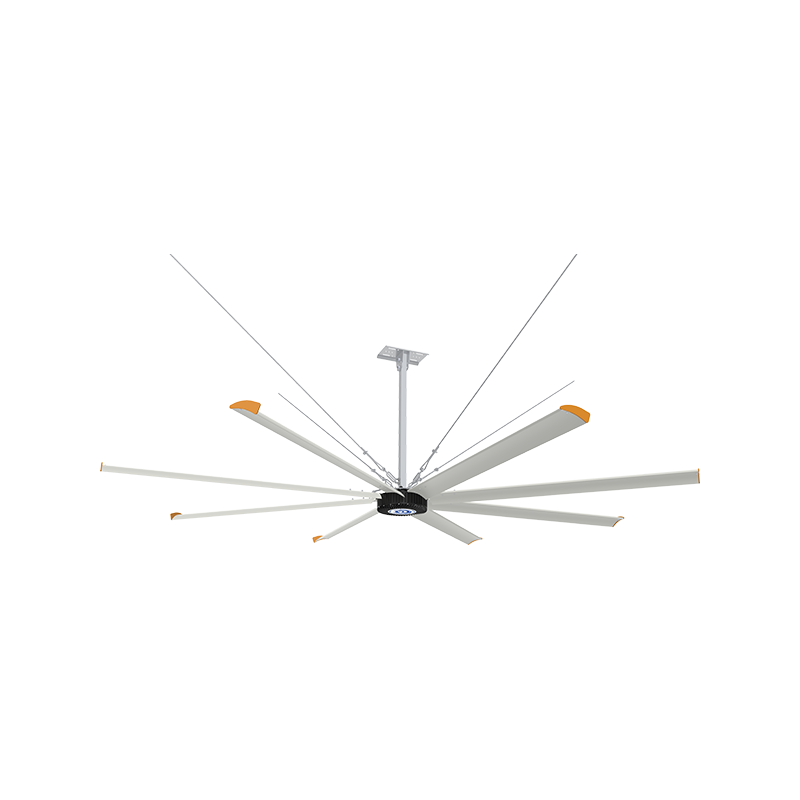
The 10-foot DC motor-driven HVLS (High Volume Low Speed) industrial and commercial ceiling fan utilizes a low-speed, high-airflow operating principle, achieving uniform airflow over a large area and a...

The 7-foot HVLS ceiling fan for small workshops is a high-efficiency ventilation device designed specifically for industrial workshops, warehouses, and small production lines. It features high-qualit...
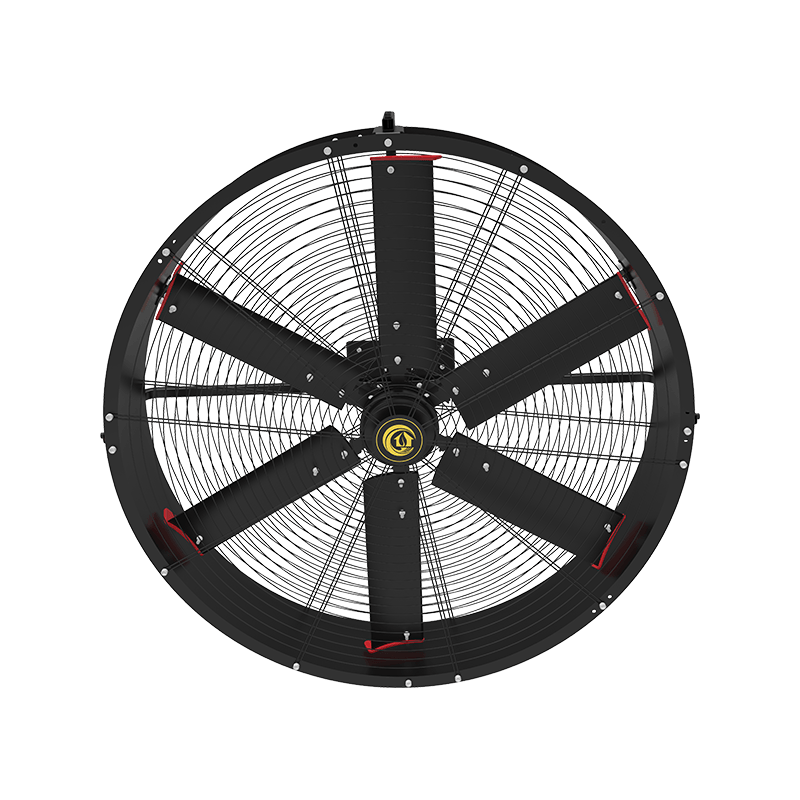
1. Extreme Airflow & Wide CoverageEquipped with massive 79-inch (2.0m) diameter aerospace-grade aluminum alloy blades. These precision-balanced blades generate a powerful, stable laminar airflow t...
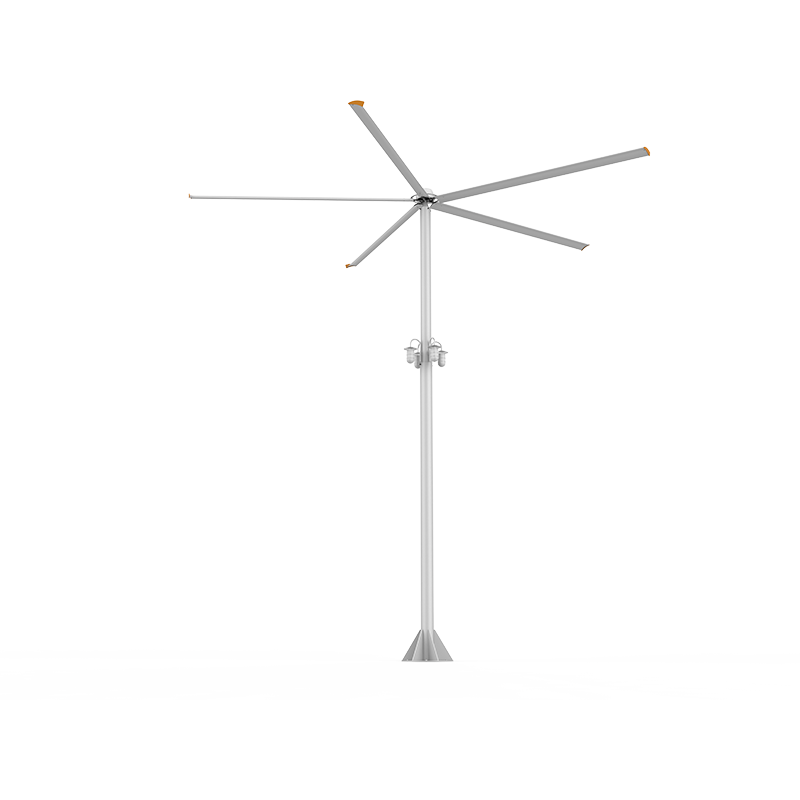
The 11-foot vertical HVLS commercial floor fan with light features a vertical floor-standing design with a total height of 3800mm (approximately 12.5 feet), suitable for spaces with ceiling heights of...
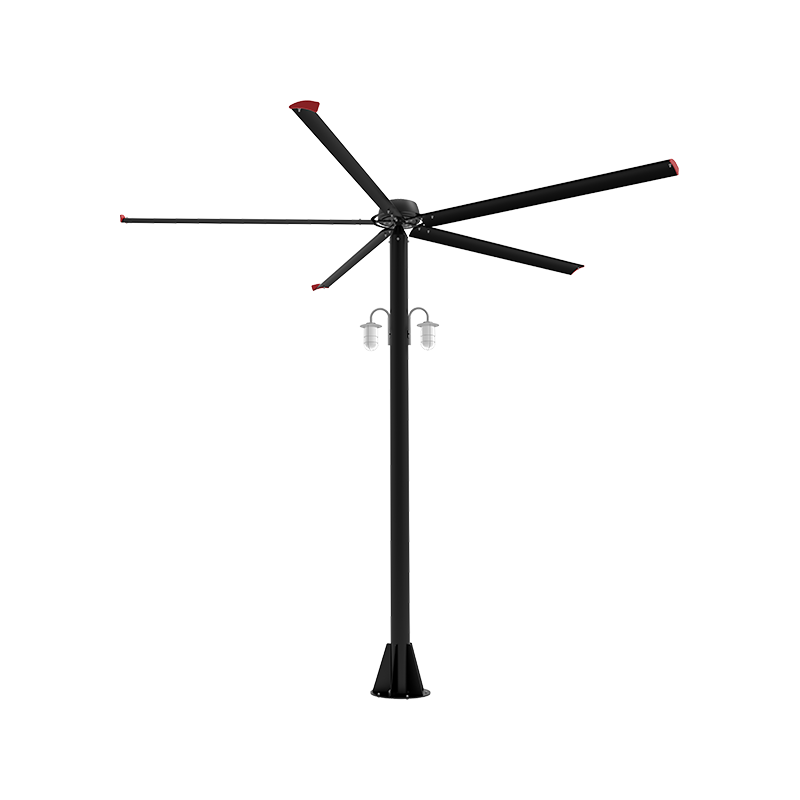
The large vertical HVLS floor-standing ventilation fan offers a variety of color options, allowing users to choose the most suitable color based on different environments and decoration needs. This c...
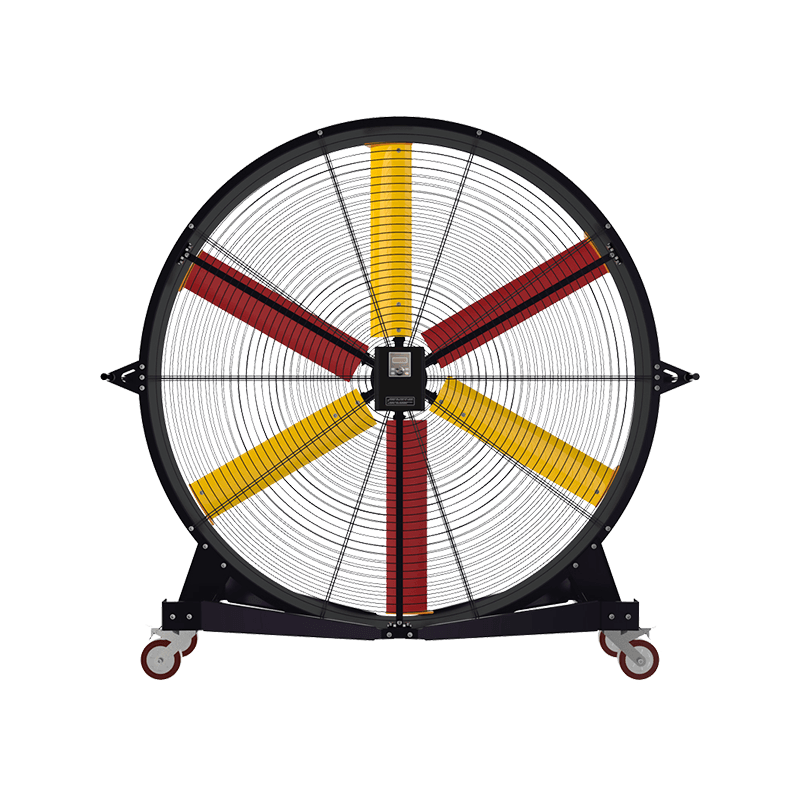
The 2-meter 4-wheel movable large floor-standing HVLS fan utilizes larger blades and a lower rotational speed, enabling it to generate a large volume of airflow while maintaining low noise levels. The...
Standing on the floor of a 6,000-square-metre factory on a hot July afternoon, you quickly notice the problem: small ceiling fans running at full speed create noisy air pockets near the floor, while ...
READ MORESpecifying industrial air movement The HVLS Ceiling Fan Isn’t a Big Ceiling Fan. Sizing, motor selection, and mounting height have to work together before a large industrial space can feel genuinely...
READ MOREA 6,800 m² factory floor used to be ventilated by roughly 300 small wall and pedestal fans. Six large ceiling fans now cover the same area, and in the manufacturer's own comparison that change cuts m...
READ MOREAt a distribution center in a hot climate, the worst heat gathers near the loading dock. The bay doors stay open through most of the shift, so any air that moves toward the dock gets pulled outside b...
READ MORE Custom Large Industrial Fans Manufacturers