

 English
 Español
 عربى
عربىThe large vertical HVLS floor-standing ventilation fan offers a variety of color options, allowing users to choose the most suitable color based on different environments and decoration needs. This c...
Content
Standing on the floor of a 6,000-square-metre factory on a hot July afternoon, you quickly notice the problem: small ceiling fans running at full speed create noisy air pockets near the floor, while workers at the far end of the line still feel stagnant heat. This is exactly the scenario large commercial fans were designed to solve. By moving a high volume of air at low speed, a large-diameter fan can cool a much bigger area with fewer machines and far less energy. The rest of this article explains what large commercial fans are, which specifications matter most, and how to avoid the common mistakes that lead to poor airflow and wasted budget.
Large commercial fans are airflow systems with propeller diameters that typically range from 6 to 28 feet. They are installed in buildings where ordinary fans cannot deliver uniform airflow, including warehouses, production halls, distribution centres, gymnasiums and commercial atriums. The most widely used type is the HVLS fan, which stands for High Volume, Low Speed. Its long blades rotate slowly enough to avoid disruptive drafts but fast enough to move a massive column of air over a broad floor area.
Beyond HVLS, commercial buyers now see ceiling fans classified by motor technology, such as PMSM and BLDC models. These motors improve efficiency, reduce heat generation and allow more precise speed control. The same product family also includes wall-mounted fans, pedestal fans and mobile stand fans for facilities where overhead mounting is not possible or where spot cooling is needed. The lineup at Aipu Fans, for instance, includes 7-ft to 28-ft HVLS fans, 6-ft to 11-ft PMSM ceiling fans, dedicated commercial ceiling fans, and portable or wall-mounted units. That range illustrates that "large commercial fans" is not one fixed product but a family of airflow solutions with different diameters, motor types and mounting options.
Investing in large commercial fans is usually justified by three concrete outcomes: wider coverage, lower energy consumption and better comfort for people working in large areas.
In a large facility, the distance between ceiling mounting points and the occupied floor zone is a major challenge. Small fans create localized breeze but do not move air far enough. Large-diameter fans generate a downward column of air that spreads across the floor and returns upward along walls, creating a broad circulation pattern. This is why one 7.3-metre industrial fan can cover an area that would require about 45 small fans. For the occupants, the result is consistent indoor air movement that keeps the skin feeling cooler without the loud blast from a high-speed small fan.
When a handful of large fans replaces dozens of small ones, the difference in power draw is striking. Manufacturer data from Aipu Fans shows that six 7.3-metre fans can cover a 6,800-square-metre factory, whereas the same area could require an estimated 300 small fans. The difference in annual energy consumption is reported to be more than one million kilowatt-hours, with electricity costs reduced by roughly 93%. The exact numbers vary by building type and operating hours, but the principle is consistent: fewer motors moving more air per kilowatt is a more economical way to cool large spaces.
Comfort is not just a nicety. In production and logistics environments, excessive heat and still air contribute to fatigue, slower work pace and a higher risk of heat-related issues. Large commercial fans provide a continuous, natural-feeling breeze that helps employees stay alert while maintaining a more stable air temperature in summer. A well-ventilated facility also helps prevent condensation, dampness and uneven temperature layers, which protects stored goods and equipment.
Before purchasing, facility owners should compare fans against a set of performance criteria rather than simply choosing the largest diameter. The table below summarises what to evaluate and which details to confirm with the supplier.
| Selection Factor | Why It Matters | What You Should Check |
|---|---|---|
| Fan diameter and coverage | Diameter determines how large an area can be handled by one fan. | Manufacturer's coverage footprint at typical mounting height. |
| Motor type | Motor efficiency influences energy bills, heat output and service life. | PMSM or BLDC motors with inverter drive and overload protection. |
| Airflow rating and blade angle | Airflow must be strong enough at floor level, not only near the ceiling. | CFM or m³/h at a specified speed; blade pitch and dynamic balance. |
| Mounting height | Low ceilings reduce usable diameter; very high ceilings need reinforced mountings. | Minimum and maximum hub heights recommended by the manufacturer. |
| Noise level | Excessive noise affects communication and comfort. | Reported dB(A) at normal operating speed. |
| Control options | Variable speed, remote control and reverse mode enhance flexibility. | Compatibility with thermostats, timers or building management systems. |
| Service and warranty | Long service life depends on accessible spare parts and support. | Warranty period, local service network and spare parts availability. |
Start by measuring the usable floor area and ceiling height. In a 6-metre-high warehouse, a 12-ft to 16-ft HVLS fan may be sufficient. In a very large assembly hall with a 10-metre ceiling, 24-ft or 28-ft fans become more appropriate. Keep in mind that obstructions such as overhead cranes, sprinkler pipes, lights and roof trusses may force changes in layout and require extension rods or special brackets.
Take PMSM ceiling fans as an example. The permanent magnet synchronous motor design provides high torque at low speed with low electricity consumption. BLDC fans offer similar benefits through electronic commutation. Both technologies allow speed controllers to vary airflow without sacrificing efficiency. For a project with many units, even a 5–10% efficiency difference among motors can have a large impact on operating budgets, so motor type should be a primary filter in procurement.
Do not rely only on fan diameter. Ask for documented airflow curves and coverage diagrams. Find out whether the fan can run in reverse for winter destratification, which pushes warm ceiling air downward. Consider the noise level at the speed you plan to use most, because a fan rated at a high maximum speed may run louder than acceptable in an office or retail area. Finally, plan for maintenance: cleaning blades, lubricating motor components and inspecting fasteners is easier when the fan comes with clear service instructions and serviceable parts.
Large commercial fans are used across many building types. The list below outlines the most common settings:
Placement does not need to be symmetric. The goal is to create a continuous circulation path across the entire occupied space. In a rectangular hall, fans are often arranged in a staggered grid so that their floor-level air jets overlap slightly. Keep at least one metre between the blade tip and nearby walls, pipes or stored materials. Positions above workstations or walkways maximise the effect on people, while positions directly above tall shelving tend to waste airflow.
A large commercial fan may weigh 50 to 100 kg or more, depending on diameter and motor. The mounting structure must be evaluated by a qualified person. For concrete ceilings, anchor bolts must meet the required load, and for steel structures, the beam or bracket must be rated for dynamic loads. Safety cables are an important backup layer on suspension systems, preventing the fan from falling even if a primary fastener fails.
Connection work should be performed by licensed electricians. Confirm that the input voltage and phase match the fan's specifications, and check whether variable speed drives require shielded cabling or additional filtering. Local building codes may also require specific clearances from sprinkler systems and lighting, especially when fans operate near fire suppression heads. A trustworthy supplier will provide installation drawings and technical documentation to support code approval.
Comparing purchase prices without comparing total cost of ownership is a common mistake. A cheap, low-efficiency fan can cost more in electricity and repairs within a few years than a higher-quality fan. Look at projected annual energy use, expected lifespan, warranty terms and the availability of replacement parts. Industrial fans that are engineered with automated production and thorough testing, such as those produced by Aipu Fans since 2006, tend to offer consistent quality and predictable service life. Buyers who work directly with such manufacturers also gain access to custom diameters, OEM production and tailored motor configurations, which simplifies projects that require a specific fit.
Choosing the right large commercial fan is not a matter of picking the biggest blade or the lowest quoted price. The best decision begins with a clear understanding of your building's dimensions, mounting constraints, airflow needs and operating hours. A reliable manufacturer should be able to provide coverage data, motor specifications, safety recommendations and after-sales support. If you are evaluating large commercial fans for a new or existing facility, start with these practical criteria and ask suppliers for detailed performance data. The right system will not only make your space more comfortable; it will also pay for itself many times over through energy savings and improved working conditions.
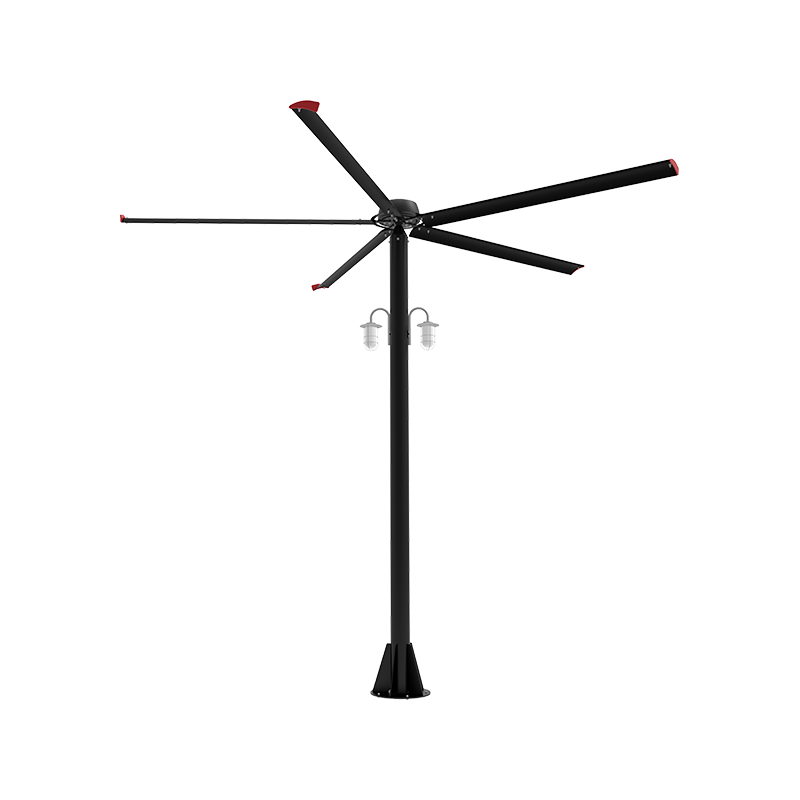
The large vertical HVLS floor-standing ventilation fan offers a variety of color options, allowing users to choose the most suitable color based on different environments and decoration needs. This c...
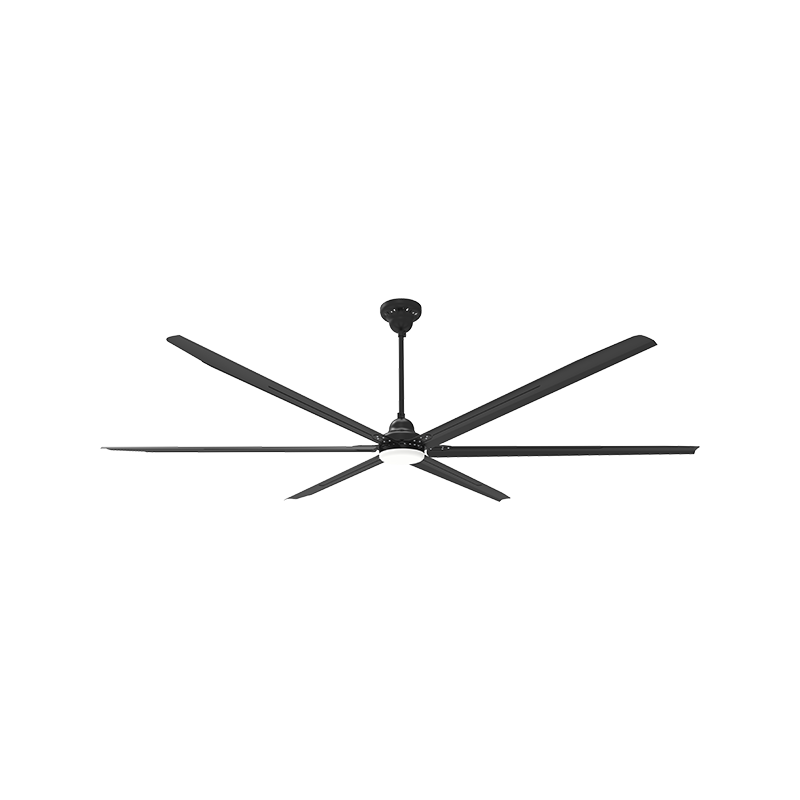
1. Core Technology: High Volume, Low SpeedNatural Breezes: Unlike the “harsh” wind from small fans, HVLS fans use massive blades rotating at low speeds to create a large-scale, three-dimensional breez...
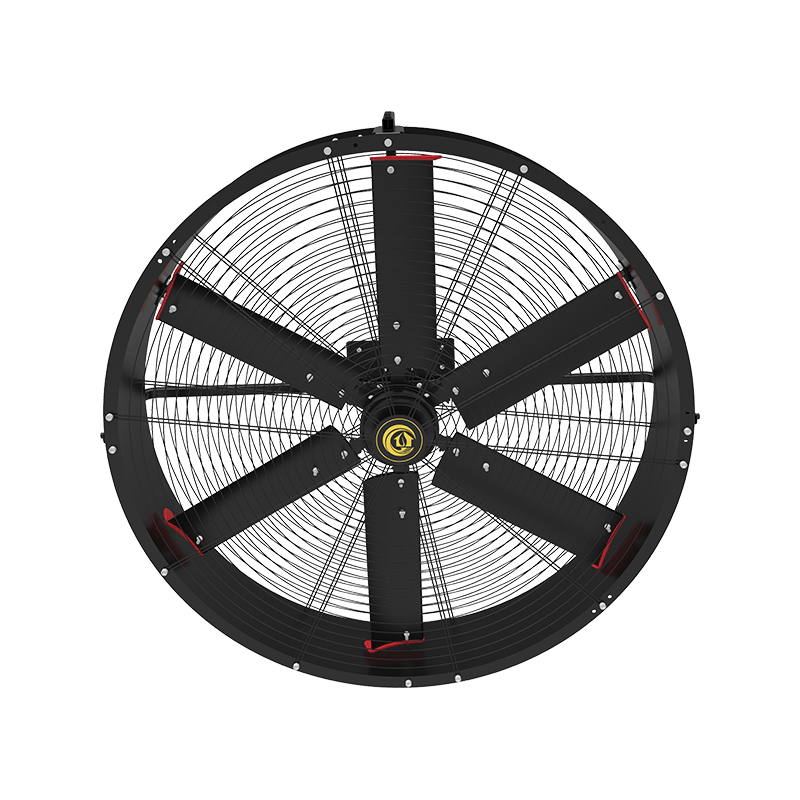
1. Extreme Airflow & Wide CoverageEquipped with massive 79-inch (2.0m) diameter aerospace-grade aluminum alloy blades. These precision-balanced blades generate a powerful, stable laminar airflow t...
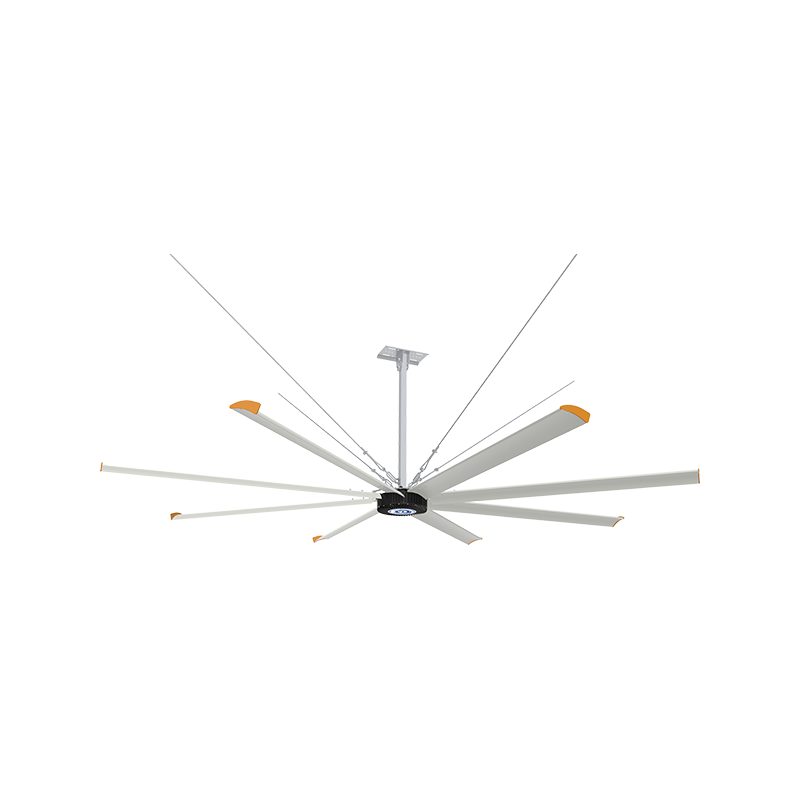
The 10-foot DC motor-driven HVLS (High Volume Low Speed) industrial and commercial ceiling fan utilizes a low-speed, high-airflow operating principle, achieving uniform airflow over a large area and a...
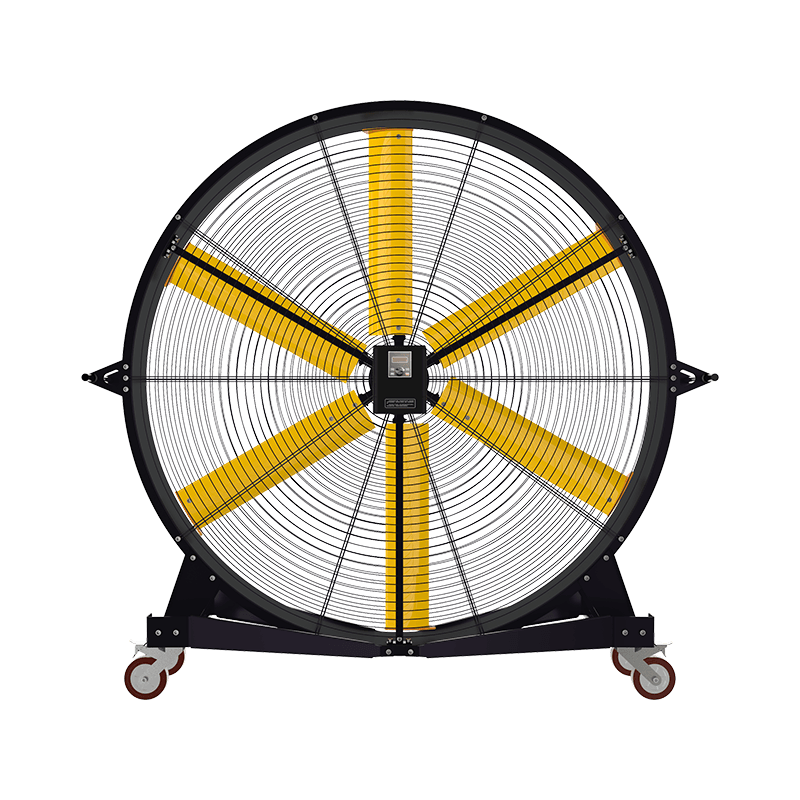
The 79-inch freestanding energy-efficient HVLS industrial fan features a robust construction designed to withstand the challenges of daily industrial use. Its impact-resistant frame ensures it can wit...
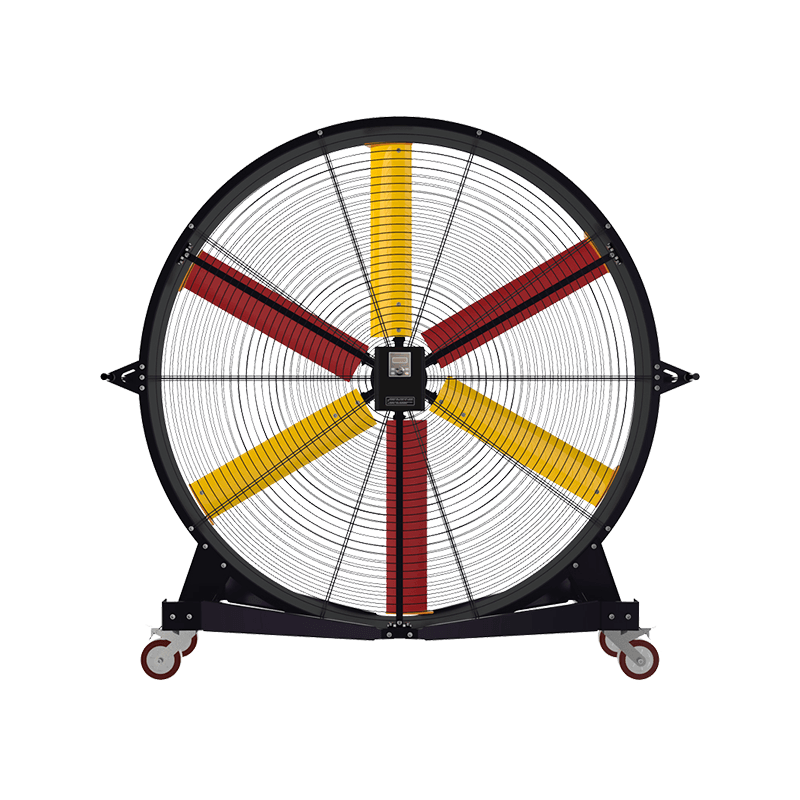
The 2-meter 4-wheel movable large floor-standing HVLS fan utilizes larger blades and a lower rotational speed, enabling it to generate a large volume of airflow while maintaining low noise levels. The...
Specifying industrial air movement The HVLS Ceiling Fan Isn’t a Big Ceiling Fan. Sizing, motor selection, and mounting height have to work together before a large industrial space can feel genuinely...
READ MORELarge-space air movement Big Commercial Fans: How to Size, Mount and Power Them One 24 ft ceiling fan can replace forty pedestal units, but only when span, mounting height and motor match the buildin...
READ MOREDealership Ventilation Planning Car Showroom Fan Installation: Comfort That Sells Tall glass facades, high ceilings, and polished floors make a showroom one of the hardest retail spaces to keep comfo...
READ MORECommercial HVLS Fans: The Quiet Engineering Behind Large-Space Airflow A practical guide to selecting high-volume, low-speed ceiling fans for warehouses, factories, and commercial halls — with the ef...
READ MORE Custom Large Industrial Fans Manufacturers