

 English
 Español
 عربى
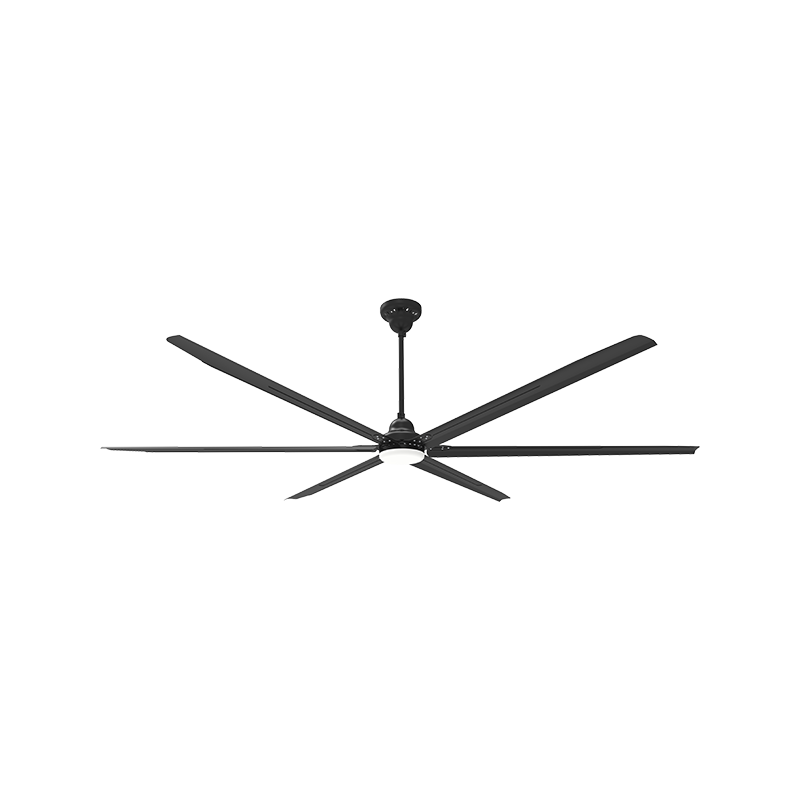
The 15-foot Even Airflow Industrial BLDC Ceiling Fan utilizes a high-efficiency BLDC motor and carefully designed blades. This ceiling fan operates with extremely low noise levels, making it suitable ...
Content
In a five-thousand-square-metre assembly hall, the air near the floor can feel heavy and listless even while the roof space bakes under the summer sun. Heat collects at ceiling level, machines push warmth at waist height, and everyone working at ground level gets the worst of both. This is exactly the problem a high-volume, low-speed (HVLS) ceiling fan is designed to solve — but only when blade span, motor efficiency, and mounting position are treated as one system.
This guide walks through the decisions in the order they should be made: floor area first, blade diameter second, motor third, mounting fourth, and the number of fans last.
An HVLS ceiling fan is a large-diameter fan, typically from 2.1 metres to more than 8 metres across, rotating at just 40 to 120 revolutions per minute. Instead of pushing a narrow high-speed stream of air, its long blades produce a slow-moving column that reaches down to the occupied zone, spreads outward across the floor, and keeps travelling for 20 to 30 metres from the fan centre. The result is a broad, even wash of air that feels calm rather than aggressive.
In a tall industrial hall, air stratifies naturally: the temperature near the roof can be 10 to 15 degrees higher than at the floor. That trapped heat adds load to air-conditioning in summer and wastes heating energy in winter. An HVLS ceiling fan mixes the vertical temperature layers, so the heat is distributed instead of parked above your head. In winter, running the fan in reverse pushes warm ceiling air gently down, reducing heating demand.
A well-sized HVLS ceiling fan does not feel like a strong gust. It feels like the air in the whole room quietly coming alive.
Blade diameter is the single most visible dimension of a fan, and it is also the most misleading one when used alone. The useful airflow area grows roughly with the square of the blade span, so a small increase in diameter makes a large difference in coverage. A practical first estimate looks like this:
| Blade diameter | Typical open-floor coverage | Common applications |
|---|---|---|
| 7 ft – 11 ft (2.1 – 3.4 m) | up to 400 m² | small workshops, packaging lines, break areas |
| 12 ft – 16 ft (3.7 – 4.9 m) | 400 – 1,000 m² | warehouses, production floors, gymnasiums |
| 17 ft – 24 ft (5.2 – 7.3 m) | 1,000 – 2,500 m² | large factories, distribution centres, hangars |
| 26 ft – 28 ft (7.9 – 8.5 m) | 2,500 m² and above | very large halls, assembly plants, storage sheds |
Diameter also has practical limits. A 7.3-metre fan needs a correspondingly clear ceiling zone: the blade tips should stay at least 0.6 to 0.9 metres away from walls, columns, lights, and beams. In a narrow building, two medium fans often produce a better airflow pattern than one very large fan.
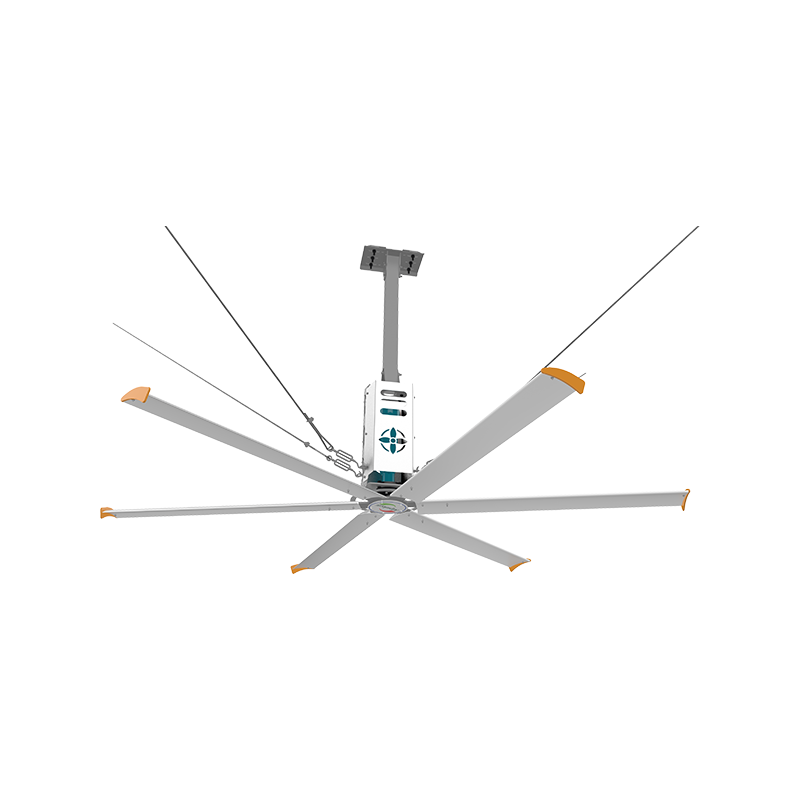 12-Foot 1.1kW HVLS Industrial Workshop Ceiling FanThis six-blade aluminum fan moves large air volumes at low speed, with variable control up to 72 RPM. Its efficiency matters for long daily operation, as motor losses directly affect running costs.View Product →
A fan that runs ten hours a day will consume more electricity over its first year than it cost to buy. That makes motor efficiency an operating-cost decision, not a specification footnote. Brushless DC (BLDC) and permanent-magnet synchronous motors hold high efficiency across a wide speed range, which matters because HVLS ceiling fans run at low speed most of the time. Traditional induction motors lose efficiency when slowed down, and they waste that loss as heat.
The scale of the saving is not small. One large manufacturer’s comparison of a 6,800 m² factory found that six 7.3-metre HVLS fans could replace roughly 300 small pedestal fans, saving on the order of 1,000,000 kWh per year — a reported reduction in electricity cost above 90 percent. Even when a project does not reach that scale, the logic holds: fewer fans, larger blades, and a high-efficiency motor reduce both running cost and maintenance.
 18-Foot Industrial-Grade Adjustable Speed BLDC Ceiling FanFeaturing a PMSM brushless motor and up to 14,200 m³/min airflow, this fan covers 1,800 square meters. Its installation flexibility suits steel, round steel, or concrete roofs, with remote and app control options.View Product →
HVLS ceiling fans work best when the blade plane sits roughly 4 to 9 metres above the floor. That height gives the air column time to develop and spread. Below about 3.5 metres, the ideal airflow pattern collapses and people standing underneath feel an uncomfortable concentrated draft instead of a wide wash. Above 10 metres, the same fan can still perform, but coverage blurs and the specification should be checked against an airflow simulation or a comparable installation.
Clearance is equally important. In occupied areas, building codes and safety standards typically require at least 3 metres of clear height below the fan. Keep blade tips away from structural columns, pallet racks, lighting rows, and roof members. In racked warehouses, position fans above aisles rather than above racks, because stored goods block the horizontal outflow.
A common mistake is buying one large fan and expecting it to cover a whole hall. In practice, fan spacing follows the usable floor area and the layout of obstructions. As a first estimate, plan for one 4-metre-class fan per 500 to 800 m², and one 7-metre-class fan per 1,000 to 1,300 m² in an open hall with a 5 to 8 metre mounting height. Then adjust for mezzanines, racks, and local heat sources.
The same airflow that cools people in summer can also cut heating costs in winter. Reversing the rotation slowly pushes the warm air trapped under the ceiling down into the working zone. A facility that heats in winter effectively uses the fan twice, and the winter mode alone often shortens the payback period by months.
26-Foot High-Capacity HVLS Industrial Ceiling FanWith six 8-meter blades rotating at up to 50 RPM, this fan creates a broad airflow loop spanning about 1,490 square meters. It helps balance temperatures and reduce humidity in large workshops and warehouses.View Product →
An HVLS ceiling fan is not a lighting fixture. A 7-metre fan with motor and mounting hardware can weigh 80 to 120 kilograms, and the structure must tolerate dynamic loads, not just static weight. Concrete roof decks and main steel beams are usually suitable; lightweight metal cladding and timber purlins often are not. Ask the supplier for installation drawings, anchoring details, and declared load values before you commit to a layout.
Electrical supply is the second reality check. Confirm whether the building provides single-phase or three-phase power at the mounting position, and whether a variable-speed controller is needed for the intended duties. Good manufacturers balance and test each unit before shipment, so request vibration reports and test certificates. For a broader view of selection criteria, efficiency, and lifecycle considerations, read the complete guide to large commercial fans.
Use this sequence when you prepare a purchase inquiry:
An HVLS ceiling fan is infrastructure, not an accessory. Ordering one means deciding how a large volume of air will behave on the hottest summer afternoon and the coldest winter morning. Get the blade span wrong and the room stays stratified; get the motor wrong and the energy bill erases the savings; get the mounting wrong and none of the engineering matters.
The right sequence is simple: measure the space, choose the diameter, count the fans, check the structure, then buy from a manufacturer that builds both the motor and the fan and can show you the test data. When the air in a large room finally moves as one body, comfort, productivity, and energy bills all move in the right direction. If you are planning a specific project, discuss the requirements with our engineering team.
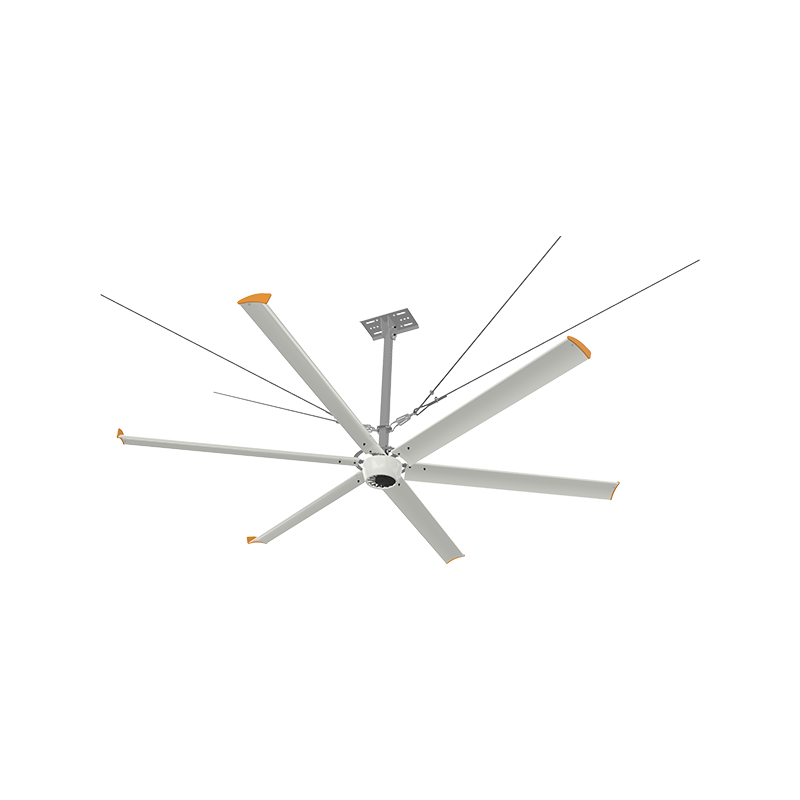
The 15-foot Even Airflow Industrial BLDC Ceiling Fan utilizes a high-efficiency BLDC motor and carefully designed blades. This ceiling fan operates with extremely low noise levels, making it suitable ...
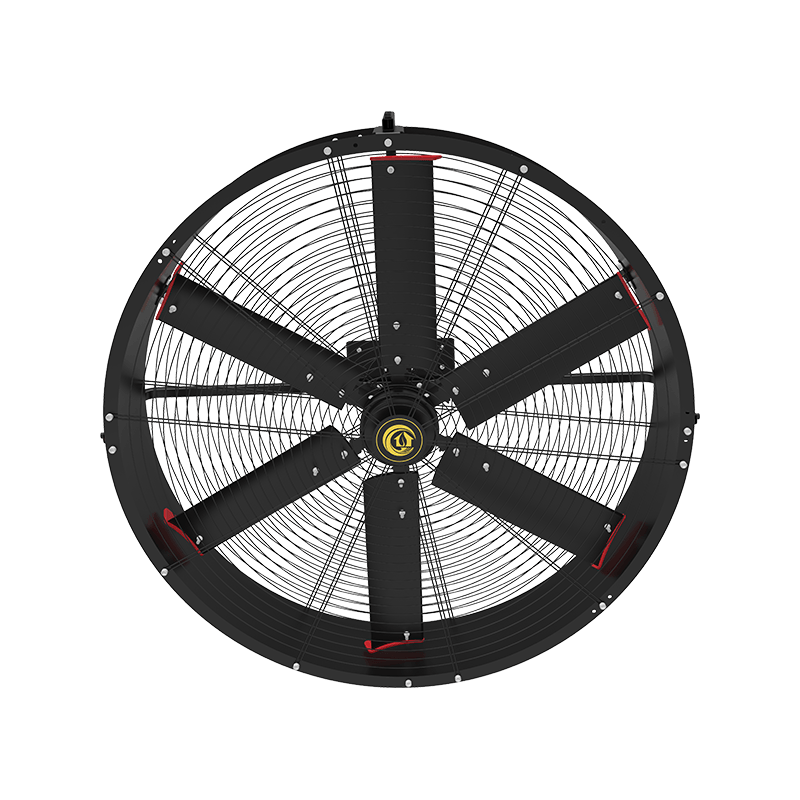
1. Extreme Airflow & Wide CoverageEquipped with massive 79-inch (2.0m) diameter aerospace-grade aluminum alloy blades. These precision-balanced blades generate a powerful, stable laminar airflow t...
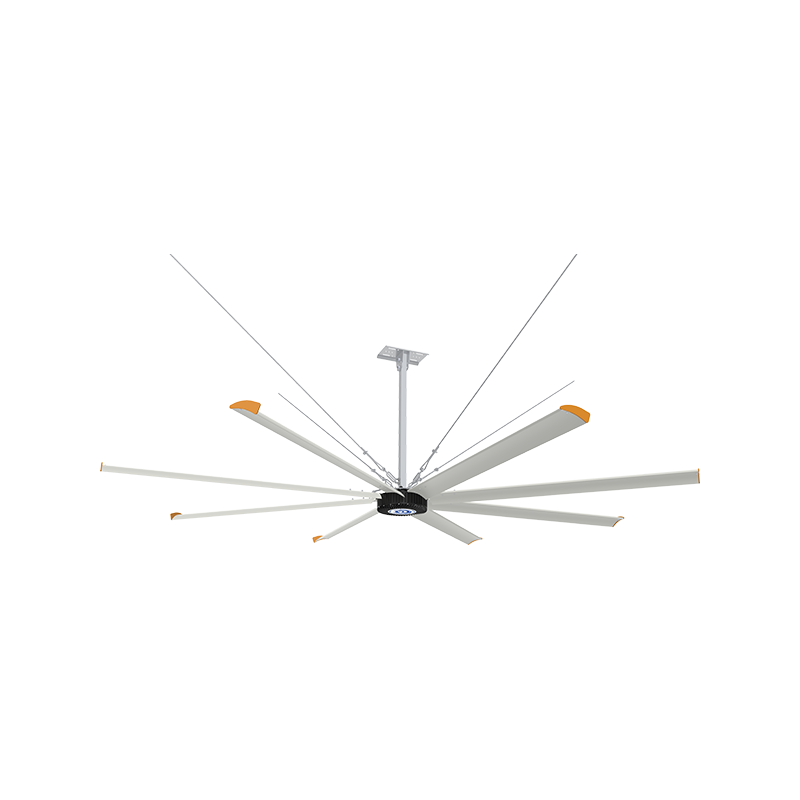
The 8-foot HVLS Large Industrial BLDC Ceiling Fan is equipped with a 0.3KW brushless DC motor, offering higher energy efficiency and lower noise levels. The lower power consumption design helps users ...
1. Core Technology: High Volume, Low SpeedNatural Breezes: Unlike the “harsh” wind from small fans, HVLS fans use massive blades rotating at low speeds to create a large-scale, three-dimensional breez...
The 10-foot DC motor-driven HVLS (High Volume Low Speed) industrial and commercial ceiling fan utilizes a low-speed, high-airflow operating principle, achieving uniform airflow over a large area and a...
1. Massive 9-Foot WingspanWith a colossal 108-inch (2.8m) diameter and 6 high-efficiency streamlined blades, this fan moves massive volumes of air even at low speeds. It is the perfect solution for el...
Standing on the floor of a 6,000-square-metre factory on a hot July afternoon, you quickly notice the problem: small ceiling fans running at full speed create noisy air pockets near the floor, while ...
READ MOREBig Fans, Low Speed, Real Results: HVLS Industrial Fans Explained When a factory floor hits 34°C, small fans only move hot air around. Large-diameter HVLS ceiling fans do the opposite: they push a t...
READ MOREDealership Ventilation Planning Car Showroom Fan Installation: Comfort That Sells Tall glass facades, high ceilings, and polished floors make a showroom one of the hardest retail spaces to keep comfo...
READ MOREA 6,800 m² factory floor used to be ventilated by roughly 300 small wall and pedestal fans. Six large ceiling fans now cover the same area, and in the manufacturer's own comparison that change cuts m...
READ MORE Custom Large Industrial Fans Manufacturers