

 English
 Español
 عربى
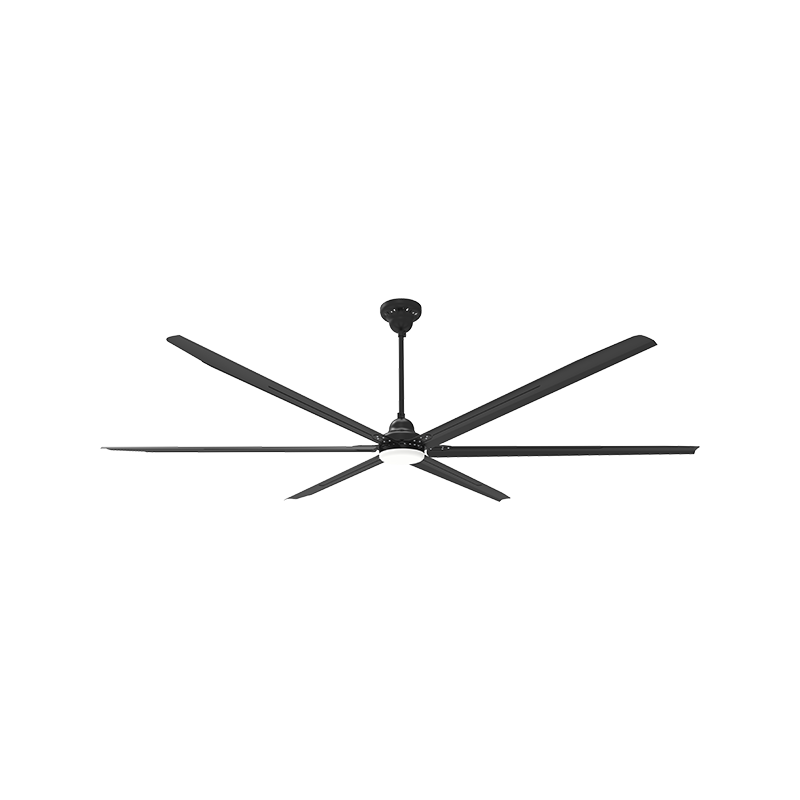
عربى1. Extreme Airflow & Wide CoverageEquipped with massive 79-inch (2.0m) diameter aerospace-grade aluminum alloy blades. These precision-balanced blades generate a powerful, stable laminar airflow t...
Content
At a distribution center in a hot climate, the worst heat gathers near the loading dock. The bay doors stay open through most of the shift, so any air that moves toward the dock gets pulled outside before it can help. Facility managers respond with rows of small pedestal fans that vibrate, cover only a few meters each, and add up to a serious electricity bill. An industrial outdoor fan designed for large, exposed spaces is a different approach: it moves a broad column of air that holds together across distance, and it is built with components that tolerate humidity, dust, and temperature swings. The right unit depends on the exact exposure level, the coverage area, and the motor technology behind the blades.
Fans rated for indoor work often fail quickly when mounted in an open loading bay, under a roof with open sides, or in a coastal workshop. Rain splash, morning dew, wind-blown dust, and ultraviolet light attack untreated metal and unsealed motors. Corrosion forms on fasteners and housings, moisture works into the bearing cavities, and blade balance shifts as dirt accumulates. A fan that runs quietly on the first day can start vibrating within a season.
So the first decision is not about cubic meters of air. It is about the weather the fan will actually see. A covered warehouse with closed walls has different requirements than an open-sided shed facing a prevailing wind. Define the environment before comparing fan curves, and the rest of the selection process becomes easier.
Three exposure classes cover most industrial sites, and each points to a different set of hardware requirements.
These are locations with no roof or with only a minimal canopy. Fans must handle direct rain, strong sun, and wide temperature swings. Look for sealed motor housings with an IP54 rating or higher, corrosion-resistant blade coatings, and stainless or galvanized mounting hardware. Pedestal and stand fans are the most common solution here because they can be moved under cover when not in use.
Loading docks, open-sided warehouses, and agricultural processing lines sit under a roof but let weather enter from the sides. Ceiling-mounted HVLS fans can work in these spaces, but the motor and control box still face humidity and dust. Moisture-resistant motor labyrinths, sealed connectors, and protective paint on all metal surfaces are the baseline. The goal is to prevent condensation from reaching live electrical components.
Some buildings are fully enclosed yet maintain high humidity, airborne dust, or extreme temperatures. Foundries, food processing plants, and packing lines fall into this group. The fan does not need rain protection, but it does need industrial-grade bearings, high-temperature motor insulation, and blades that shed dust without losing balance.
Once the environment is defined, airflow coverage becomes the main engineering question. A small pedestal fan produces a narrow, fast jet that breaks apart within a few meters. To move air across a 6,800-square-meter floor with small fans, an operation can easily install 300 units, all drawing power and all needing maintenance. The airflow pattern is uneven, with pockets of high velocity near the fans and dead zones between them.
A large-diameter HVLS fan works on the opposite principle. Its blades rotate slowly and push a wide column of air downward at low velocity. That column spreads along the floor and forms a moving air layer up to three meters thick. Because the air travels outward rather than straight down, one unit covers a much larger floor area with consistent speed. The practical result is a major reduction in fan count and total energy use.
| Configuration | Number of Fans | Coverage Pattern | Relative Electricity Cost |
|---|---|---|---|
| Large-diameter HVLS fans | 6 | Uniform air layer over the full floor | About 7 percent of the small-fan setup |
| Small pedestal fans | 300 | Uneven, with dead zones between fan streams | Baseline (highest) |
The numbers come from real industrial installs where large fans replaced dense fields of small ones. The exact savings depend on ceiling height, door usage, and climate, but the direction of the result is consistent: fewer high-efficiency fans win on both airflow uniformity and operating cost.
The motor is the first component to fail in an outdoor or semi-outdoor fan, which makes motor technology a procurement issue rather than a technical footnote. Traditional induction motors are widely used, but they run hot, draw more current, and offer limited speed control. Permanent magnet synchronous motors (PMSM) and brushless DC motors (BLDC) are the preferred approaches for industrial fans that run long hours in demanding environments.
Both PMSM and BLDC designs remove carbon brushes, which are a wear item in older motor types. They also operate more efficiently because the rotor magnetic field is generated by permanent magnets instead of induced current. Lower operating temperature means slower degradation of bearings and insulation, which matters when the fan hangs in a humid dock or a dusty workshop for years.
When comparing suppliers, ask for the specific motor type, the insulation class, and the expected bearing life. A supplier who cannot answer these questions in detail may be assembling generic components rather than engineering a durable product.
Not every site can take a ceiling-mounted HVLS fan. Pre-engineered steel buildings usually have enough structure, but older sheds, awnings, and temporary canopies may not. Fortunately, the industrial fan market covers three distinct mounting scenarios.
| Fan Type | Mounting | Best For | Key Limitation |
|---|---|---|---|
| HVLS ceiling fan | Structural ceiling or steel beam | Large covered floors and loading docks | Requires reliable overhead structure |
| Wall-mounted fan | Wall, column, or upright post | Fixed-position spot cooling along walls | Coverage is directional, not circular |
| Pedestal or stand fan | Floor, movable base | Temporary worksites and flexible relocation | Footprint and loose objects on the floor |
Manufacturers such as Shanghai Aipu Fans cover all three lines, with ceiling fans from 6 to 28 feet in diameter and mobile units in the Airmove Stand and Airpole Pedestal series. For sites with no suitable beam, a wall-mounted or pedestal fan can still deliver meaningful airflow without major structural modifications.
A few targeted questions will separate a genuinely weather-resistant industrial fan from an indoor fan with an outdoor sticker on the box.
These questions are practical, and a competent supplier will welcome them. If the answers are vague, treat that as a warning sign.
For a facility manager who is evaluating an industrial outdoor fan, the supplier's production depth matters as much as the fan's specification sheet. Shanghai Aipu Fans has operated as an industrial ceiling fan manufacturer since 2006, with an 8,000-square-meter facility that includes machining, cutting, welding, and testing departments. The company develops PMSM and BLDC motor technology in-house, produces HVLS ceiling fans up to 28 feet in diameter, and also makes wall-mounted and pedestal models for applications where overhead mounting is not possible.
That combination matters for buyers because it shortens the distance between a production problem and a production solution. When a facility needs custom mounting, a different voltage, or a specific motor configuration, a manufacturer with its own testing center can respond faster than a trading company that simply imports finished fans.
The deciding factors for an industrial outdoor fan remain the same, regardless of supplier: the fan must survive the weather it will face, move enough air across the full working area, and keep energy consumption under control. Define the environment, check the motor and blade specifications, and verify the supplier's manufacturing and testing capacity. A fan that passes those checks will deliver airflow that lasts.
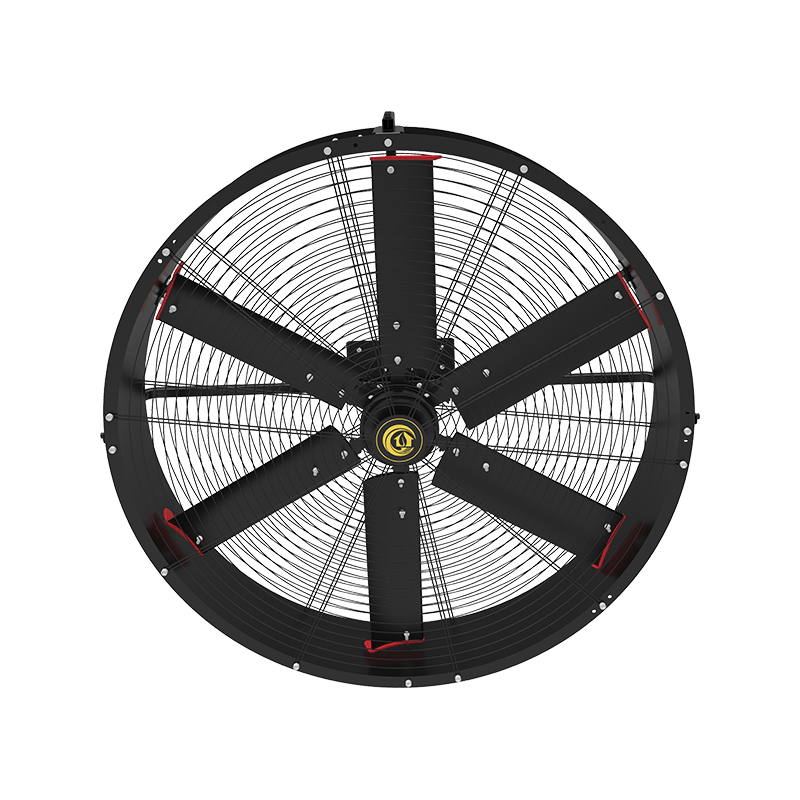
1. Extreme Airflow & Wide CoverageEquipped with massive 79-inch (2.0m) diameter aerospace-grade aluminum alloy blades. These precision-balanced blades generate a powerful, stable laminar airflow t...
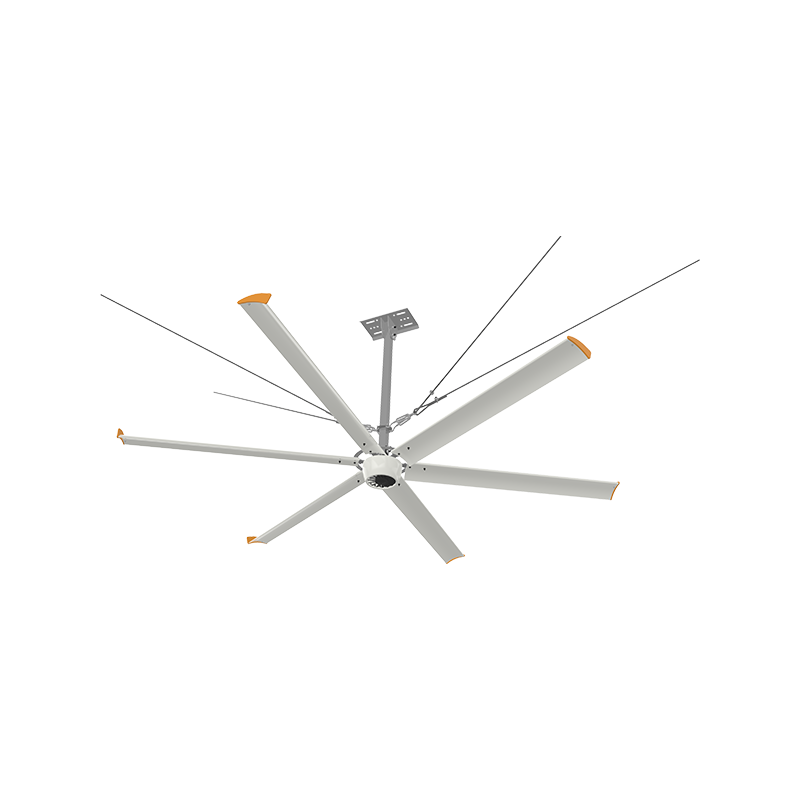
The 15-foot Even Airflow Industrial BLDC Ceiling Fan utilizes a high-efficiency BLDC motor and carefully designed blades. This ceiling fan operates with extremely low noise levels, making it suitable ...
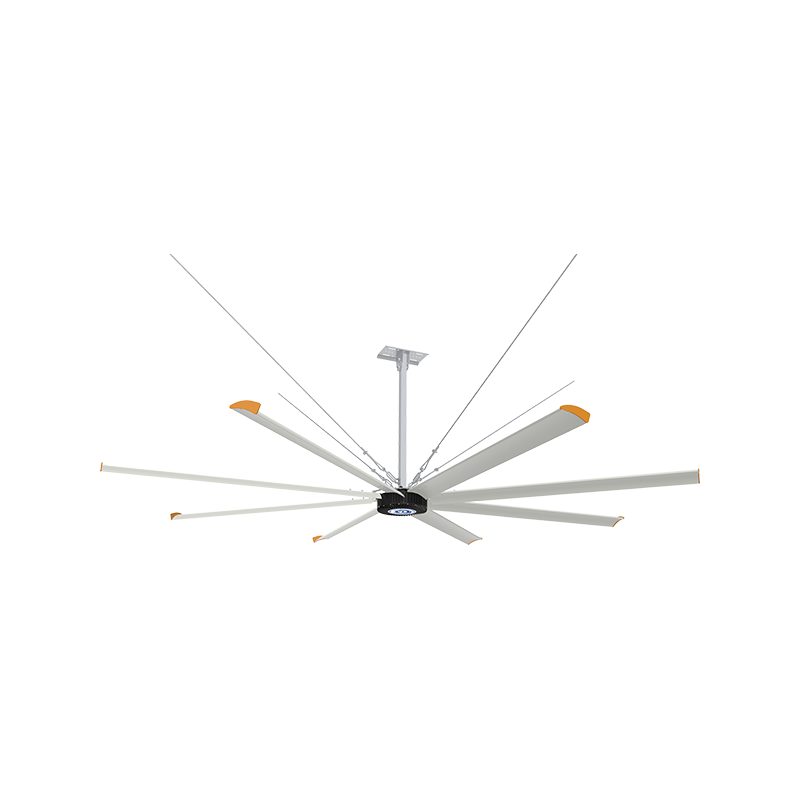
The 8-foot HVLS Large Industrial BLDC Ceiling Fan is equipped with a 0.3KW brushless DC motor, offering higher energy efficiency and lower noise levels. The lower power consumption design helps users ...
The 10-foot DC motor-driven HVLS (High Volume Low Speed) industrial and commercial ceiling fan utilizes a low-speed, high-airflow operating principle, achieving uniform airflow over a large area and a...
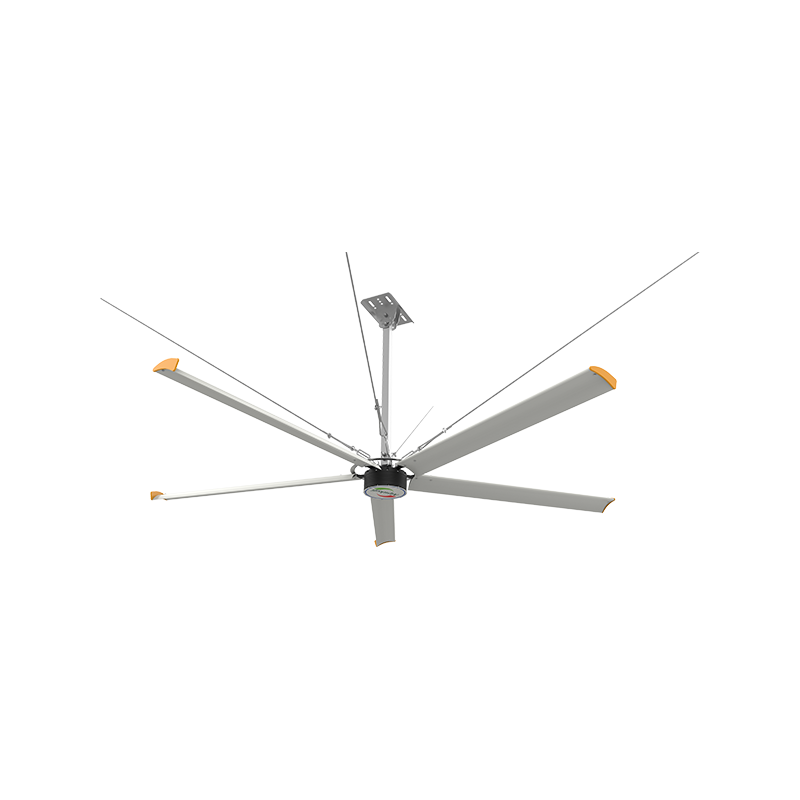
The industrial-grade aviation metal large-blade BLDC ceiling fan utilizes brushless DC motor (BLDC) technology, allowing it to provide powerful airflow with low power consumption. The ceiling fan rapi...
1. Core Technology: High Volume, Low SpeedNatural Breezes: Unlike the “harsh” wind from small fans, HVLS fans use massive blades rotating at low speeds to create a large-scale, three-dimensional breez...
Industrial Ventilation Planning The Right Industrial Ceiling Fan Size Starts With the Building A practical sizing guide to diameter, ceiling height, CFM, and fan layout for warehouses, plants, and di...
READ MOREBig Fans, Low Speed, Real Results: HVLS Industrial Fans Explained When a factory floor hits 34°C, small fans only move hot air around. Large-diameter HVLS ceiling fans do the opposite: they push a t...
READ MORESpecifying industrial air movement The HVLS Ceiling Fan Isn’t a Big Ceiling Fan. Sizing, motor selection, and mounting height have to work together before a large industrial space can feel genuinely...
READ MORECommercial HVLS Fans: The Quiet Engineering Behind Large-Space Airflow A practical guide to selecting high-volume, low-speed ceiling fans for warehouses, factories, and commercial halls — with the ef...
READ MORE Custom Large Industrial Fans Manufacturers