

 English
 Español
 عربى
1. Extreme Airflow & Wide CoverageEquipped with massive 79-inch (2.0m) diameter aerospace-grade aluminum alloy blades. These precision-balanced blades generate a powerful, stable laminar airflow t...
Content
Industrial Ventilation Planning
The Right Industrial Ceiling Fan Size Starts With the Building
A practical sizing guide to diameter, ceiling height, CFM, and fan layout for warehouses, plants, and distribution centers.
A facility manager once asked me to fix a 45,000-square-foot distribution bay where four small ceiling fans hummed uselessly under 22-foot ceilings. The previous owner had bought fans the way you furnish a break room — by what looks reasonable. The result was warm, still air over half the floor and a wobbly fan above the desk area. Here is the short version: choose a fan diameter roughly one-third of the room's longest horizontal dimension, keep the blade tips at least 10 feet above the finished floor, and size airflow by air changes per hour, not by square footage. The rest of this guide explains why those three rules work and where they bend.
Before opening a catalog, measure the bay you want to ventilate: length, width, and ceiling height. Write each number down separately. A 200-foot-long building divided by a fire wall behaves like two 100-foot spaces, so treat each bay as its own airflow calculation.
The classic rule for HVLS fans is to make the fan diameter about one-third of the room's longest horizontal dimension. A 30-foot bay calls for a 10-foot fan; a 60-foot bay calls for a 20-foot fan. This ratio gives the air column enough width to reach the floor at useful speed while keeping the blade tips clear of walls and obstructions.
| Fan Diameter | Typical Coverage | Typical Ceiling Height |
|---|---|---|
| 7–8 ft | 800–1,500 sq ft | 10–14 ft |
| 10–12 ft | 1,500–3,000 sq ft | 12–18 ft |
| 14–16 ft | 3,000–5,000 sq ft | 14–20 ft |
| 18–20 ft | 5,000–8,000 sq ft | 18–24 ft |
| 24–28 ft | 8,000–12,000+ sq ft | 24 ft and above |
These are planning ranges, not guarantees. A published coverage figure assumes an open floor with no racking blocking the airflow and a ceiling high enough to let the air column develop.
Diameter is the headline number, but ceiling height is the constraint that most often ruins an installation. Keep the blade tips at least 10 feet above the finished floor, and add more clearance where forklift traffic or stacked goods raise the occupied height. The blades also need roughly 12 to 18 inches of open space above them so air can enter the fan smoothly.
Warning: A 24-foot fan under a 16-foot ceiling leaves no useful downrod length and produces a concentrated jet of air at floor level. The result is a drafty, noisy bay with poor air coverage near the walls.
For a 14-to-18-foot ceiling, a 12-to-16-foot fan is the right working range. Ceilings from 18 to 24 feet suit 17-to-24-foot diameters, and spaces above 24 feet can make good use of 26-to-28-foot machines. If your bay sits in the lower end of that range, a 16-foot reversible HVLS fan is a common ceiling-height match for medium industrial spaces.
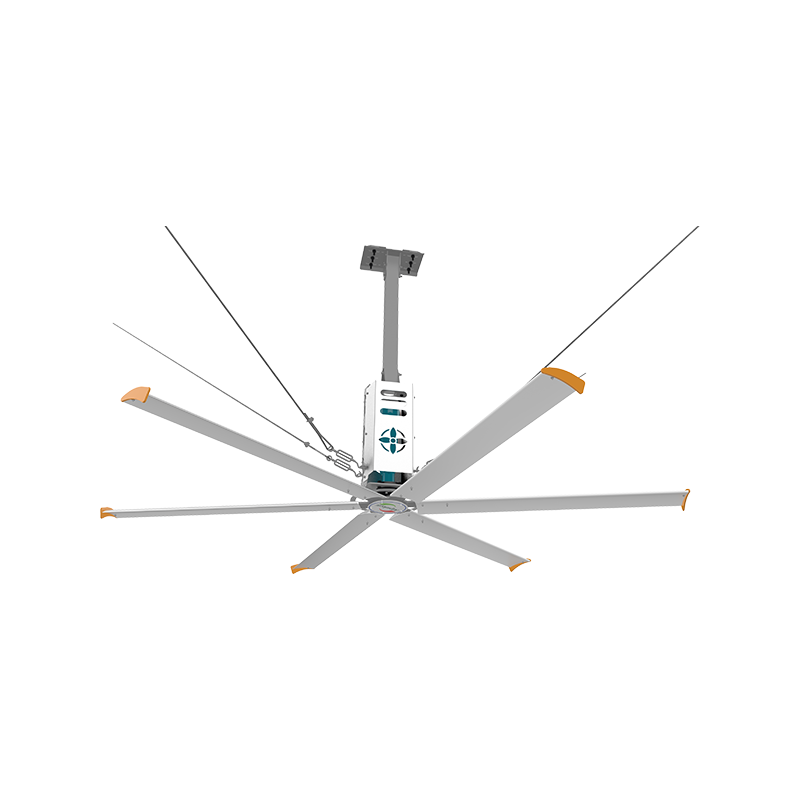 16-Foot Reversible HVLS Ceiling Fan with Nord MotorThis 16-foot reversible HVLS fan suits medium industrial spaces with 14-to-18-foot ceilings. Its Nord motor supports multiple voltages and provides low-noise operation, while forward and reverse modes help manage seasonal temperature differences.View Product →
Square footage tells you how much floor you are covering; CFM (cubic feet per minute) tells you how much air you are actually moving. A fan's CFM rating is meaningless by itself — it only becomes useful when compared against the building volume it serves and the air changes you want per hour.
The standard formula is simple: required airflow (CFM) equals building volume in cubic feet, multiplied by target air changes per hour, divided by 60. Take a 200-by-120-foot warehouse with a 20-foot ceiling: 200 × 120 × 20 = 480,000 cubic feet. For a distribution center aiming at 8 air changes per hour, that works out to 480,000 × 8 ÷ 60 = 64,000 CFM.
| Application | Recommended ACH |
|---|---|
| Warehousing and storage | 4–6 |
| Distribution centers | 6–10 |
| General manufacturing | 8–12 |
| Welding and foundry work | 15–20 |
| Livestock housing | 15–25 |
Info: HVLS fans circulate air; they do not replace mechanical exhaust. If your process produces welding smoke, solvent fumes, or combustible dust, local ventilation codes still apply.
Large-diameter fans exist because small fans scale poorly. One 7.3-meter HVLS fan can move as much air as roughly 45 small fans, and six large fans can serve a 6,800-square-meter factory that would otherwise need 300 small units. The energy difference is even more dramatic: switching from 300 small fans to six large ones can cut annual fan electricity use by more than one million kilowatt-hours — about a 93 percent reduction in fan energy cost.
A correctly sized HVLS fan should feel like a steady breeze from across an open field, not like standing in front of a propeller.
The physics explains the numbers. Small fans accelerate a narrow air column at high speed; HVLS fans push a 1-to-3-meter-deep layer of air downward and let it spread across the floor before rising again. That layer reaches aisles, mezzanine edges, and loading docks without creating uncomfortable drafts.
For warehouse bays in the 18-to-24-foot ceiling class, a 20-foot fan with aviation-grade metal blades delivers the broad, even airflow that large storage layouts need.
20-Foot Aviation-Grade Metal Blade HVLS Warehouse FanDesigned for warehouse bays with 18-to-24-foot ceilings, this 20-foot fan uses six aviation-grade metal blades to cover up to 1000 square meters. Adjustable speed control and broad airflow help reduce temperature variations across large storage layouts.View Product →
The principle has limits. When ceilings drop below about 13 feet, large diameters do not have room to develop their air layer. Partitioned spaces, heavy racking, and very narrow bays are often better served by smaller units spaced closer together. And when the application shifts to lighter commercial settings — showrooms, gymnasiums, lobbies — the same sizing logic runs in a smaller diameter range. Our guide to large commercial fan selection walks through those trade-offs in detail.
Once the diameter is set, the layout determines whether the bay actually feels uniform. For 20-to-24-foot fans in an open space, space them roughly 60 to 80 feet apart in a staggered grid, with air columns overlapping by about 10 to 15 percent. This prevents pockets of stale air between coverage circles.
Walk the ceiling before finalizing positions. Pendant lights, sprinkler lines, overhead crane rails, and mezzanines all change where a fan can hang. Each fan needs a clear load path to structural steel or concrete, with bolts rated for the combined weight of the fan, the downrod, and the dynamic forces of operation. In high-heat zones, position fans directly over the heat source. In racked warehouses, place them in aisles rather than above the racks.
Danger: Never mount a large-diameter fan to a suspended ceiling grid, drywall, or thin metal decking. The attachment point must be rated for the fan weight plus dynamic load; if in doubt, have a structural engineer review it.
Motor technology changes the sizing math in a practical way. PMSM and BLDC fans run at low RPM under high torque, which suits a large blade: high airflow without tip noise and without the energy loss of an induction motor at partial load. They also allow smooth speed control, so one installation can run at full airflow in summer and at 40 percent in shoulder seasons.
Blade material matters less for diameter selection and more for lifespan in service. Aluminum alloy blades hold their shape in humid conditions, while aviation-grade metal blades add stiffness at larger diameters. A stiffer blade at the same diameter moves slightly more air and vibrates less as it ages. When comparing suppliers, ask for wattage-to-CFM at the same operating point, not just the peak CFM number in a brochure.
For smaller workshops and low bays, the solution is often a smaller, efficient fan rather than a scaled-down copy of a giant unit. A 7-foot low-energy brushless DC fan moves meaningful air in a compact workshop without the draft and mounting demands of a large HVLS machine.
 7-Foot Low-Energy Brushless DC HVLS Industrial FanFor smaller workshops and low bays, this 7-foot brushless DC fan offers efficient airflow with only 0.3kW power consumption. Weighing 30kg and easy to install, it covers up to 1800 square meters and suits various roof types.View Product →
Success: Sizing an industrial ceiling fan does not require a ventilation engineering degree. It requires measuring the building first, respecting clearance rules, and demanding efficiency data.
If you collect these numbers and send them to our application engineers through the contact page, you will get a fan layout matched to your exact bay geometry — not a generic catalog suggestion.
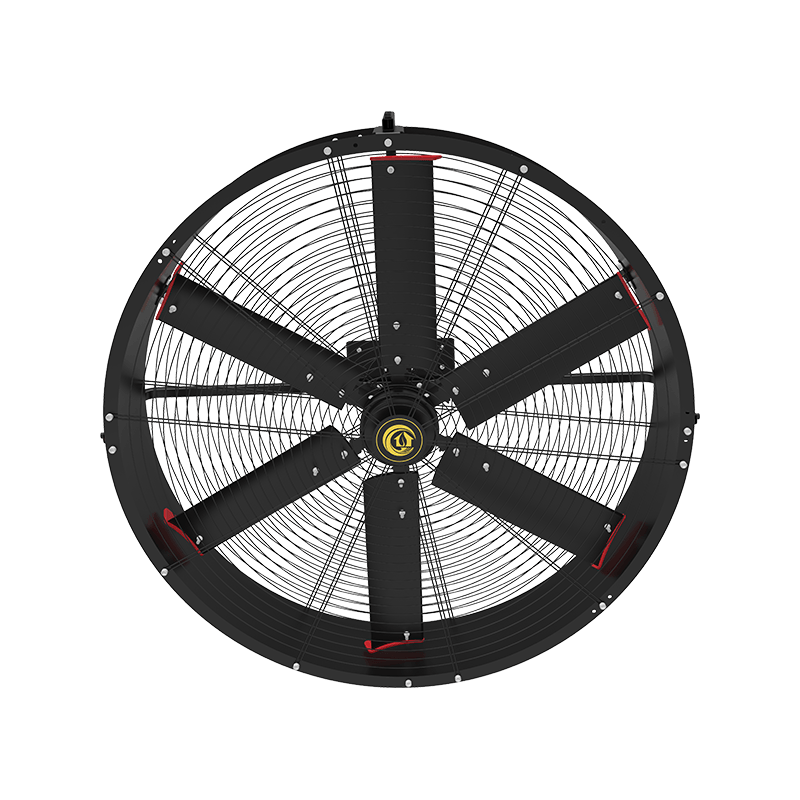
1. Extreme Airflow & Wide CoverageEquipped with massive 79-inch (2.0m) diameter aerospace-grade aluminum alloy blades. These precision-balanced blades generate a powerful, stable laminar airflow t...
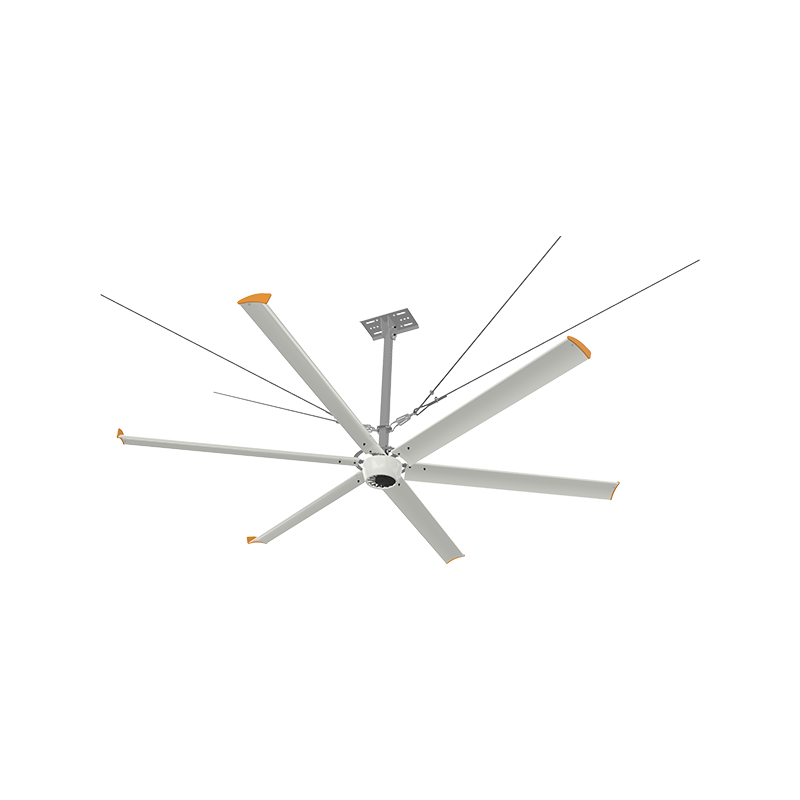
The 15-foot Even Airflow Industrial BLDC Ceiling Fan utilizes a high-efficiency BLDC motor and carefully designed blades. This ceiling fan operates with extremely low noise levels, making it suitable ...
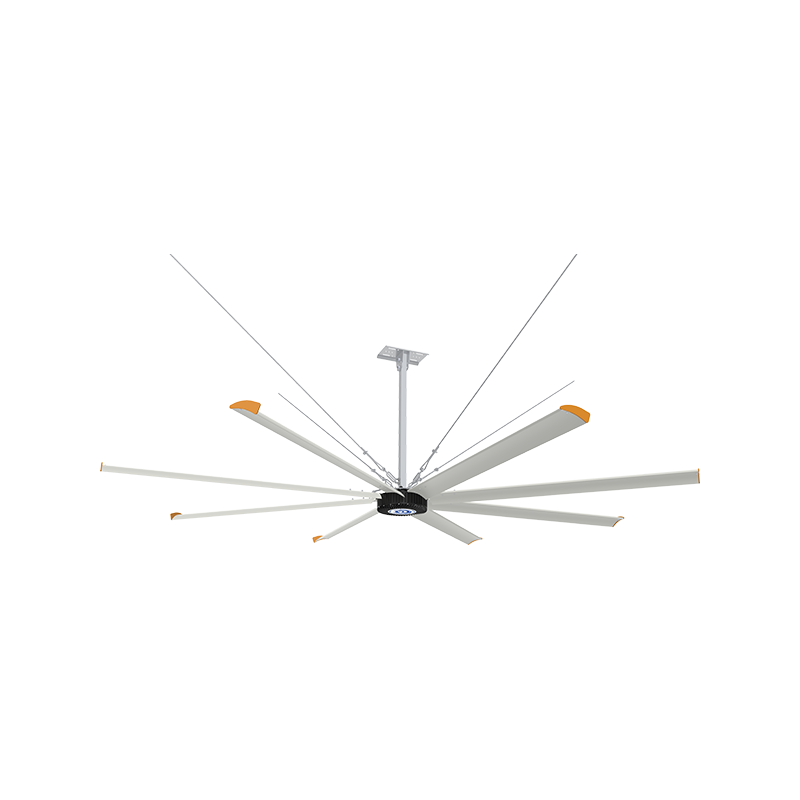
The 8-foot HVLS Large Industrial BLDC Ceiling Fan is equipped with a 0.3KW brushless DC motor, offering higher energy efficiency and lower noise levels. The lower power consumption design helps users ...

The blades of the 14-foot BLDC motor HVLS industrial aluminum alloy ceiling fan are made of high-strength aluminum alloy, offering advantages such as light weight (each blade weighs approximately 3.5k...
The 10-foot DC motor-driven HVLS (High Volume Low Speed) industrial and commercial ceiling fan utilizes a low-speed, high-airflow operating principle, achieving uniform airflow over a large area and a...
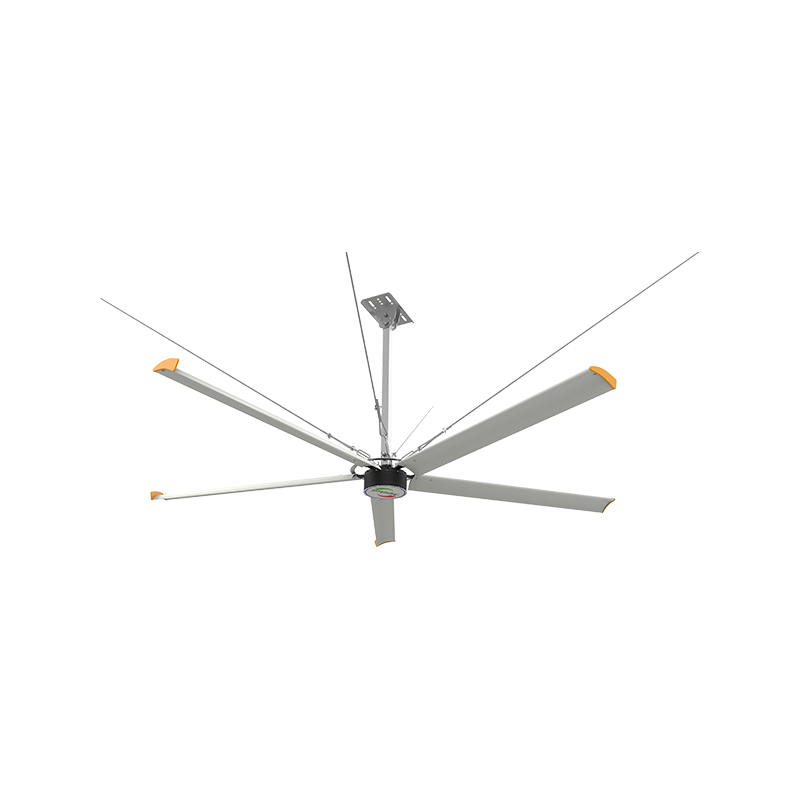
The industrial-grade aviation metal large-blade BLDC ceiling fan utilizes brushless DC motor (BLDC) technology, allowing it to provide powerful airflow with low power consumption. The ceiling fan rapi...
Specifying industrial air movement The HVLS Ceiling Fan Isn’t a Big Ceiling Fan. Sizing, motor selection, and mounting height have to work together before a large industrial space can feel genuinely...
READ MOREAt a distribution center in a hot climate, the worst heat gathers near the loading dock. The bay doors stay open through most of the shift, so any air that moves toward the dock gets pulled outside b...
READ MORECommercial HVLS Fans: The Quiet Engineering Behind Large-Space Airflow A practical guide to selecting high-volume, low-speed ceiling fans for warehouses, factories, and commercial halls — with the ef...
READ MOREAs an integrated manufacturing and trading company with core technology advantages, Shanghai Aipu Fans Co., Ltd. specializes in providing customized industrial ceiling fans and OEM services to meet d...
READ MORE Custom Large Industrial Fans Manufacturers