

 English
 Español
 عربى
The 15-foot Even Airflow Industrial BLDC Ceiling Fan utilizes a high-efficiency BLDC motor and carefully designed blades. This ceiling fan operates with extremely low noise levels, making it suitable ...
Content
A 6.1-meter ceiling sounds like an opportunity — until you feel the stagnant air on the floor. In warehouses, workshops, and sanctuaries with a 20-foot deck, heat stratifies overhead while workstation level stays warm and stuffy. Standard residential ceiling fans cannot fix the problem; their narrow airflow jets dissipate before they ever reach you. The solution that engineering teams repeatedly land on is a 20-foot ceiling fan built on HVLS (High-Volume, Low-Speed) principles: a six-meter fan moving air in broad, slow sheets rather than small, fast streams. This guide walks through why that choice matters and how to select a 20-foot-diameter fan that pays for itself in comfort and electricity.
Most conventional fans are designed for ceilings around 2.4 to 3 meters. With a 20-foot mounting height, the air jet loses velocity and becomes turbulent long before it reaches people and machines. The operating numbers explain the failure better than any description.
| Metric | Residential fan | 20-foot HVLS fan |
|---|---|---|
| Diameter | 1.2–1.5 m | 6.1 m |
| Mounting height | up to 3 m | 3–12 m |
| Rotational speed | 200–400 RPM | 50–70 RPM |
| Useful floor coverage | 10–25 m² | 500–1,000 m² |
| Airflow layer depth | shallow, jet-shaped | 1–3 m, broad sheet |
Stratification is real: without air movement, the temperature difference between a 6-meter roof and the floor can reach 3–5°C in warm conditions. A 20-foot ceiling fan directly attacks that vertical temperature gradient by keeping the air layer mixed.
A 20-foot fan is not a larger version of a household fan. It is a different machine with a different aerodynamic goal.
HVLS blades are long, broad, and pitched at a shallow angle. They rotate slowly, pushing a column of air downward that spreads across the floor in a layer thick enough to cover aisles, racks, and open stations. A 20-foot-diameter fan at 60 RPM can generate an airflow footprint of more than a thousand square meters at very low velocities.
On a 6-meter ceiling, the same principle works in a slightly different way. Instead of mounting the blades extremely close to the deck, you use a downrod to keep the fan low enough that the airstream connects with the occupied zone while still clearing forklift and pedestrian clearances. The result is a continuous, gentle air movement that feels natural rather than noisy or mechanical.
Start with the width and shape of the space, not a rule of thumb for square footage alone. A 20-foot fan is useful in open bays of roughly 500 to 1,000 square meters, but the effective coverage depends on heat sources, partitions, and mounting height.
Work through the geometry: with a 6-meter deck, place the fan hub at 4.5 to 5 meters using a downrod of 1.5 meters or more. The blade tips need at least 2.5 meters of clearance from the floor and 0.6 meters from any beam, wall, or overhead obstruction.
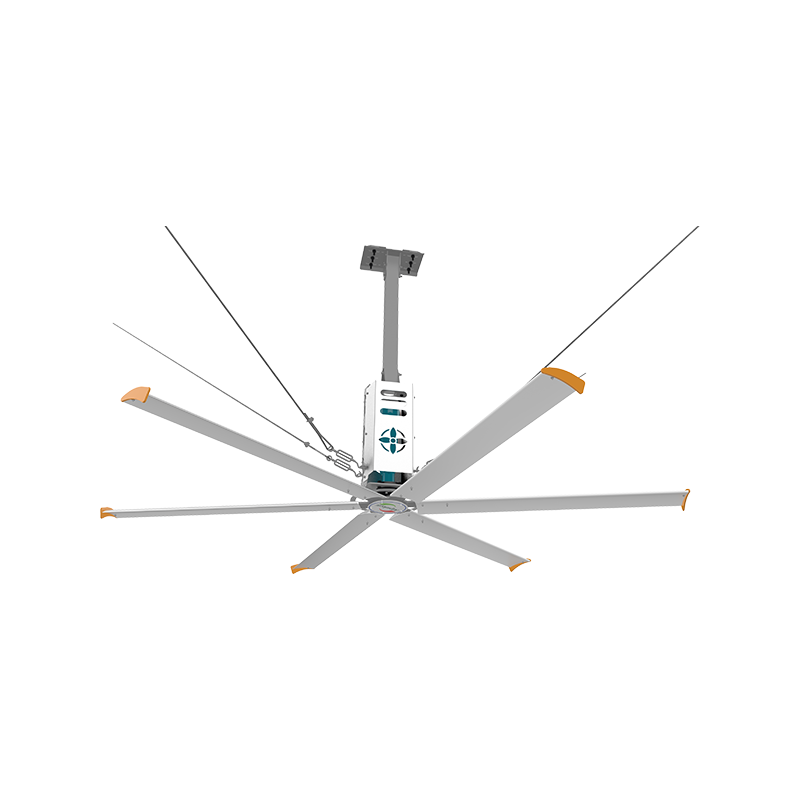 20-Foot Aviation-Grade Metal Blade HVLS Fan for Large SpacesThis 6.1-meter fan moves 12,000 m³/min across 1,000 m², making it ideal for warehouses and factories needing even airflow without temperature differences.View Product →
For a step-by-step sizing process that includes CFM estimates and mounting layouts, see the complete guide to large commercial fans.
A 20-foot fan weighs roughly 45–70 kg depending on blade material and motor size. It is not a weekend DIY project. The mounting point should be an engineered steel beam, structural concrete deck, or roof truss with a verified load capacity.
The electrical side needs a dedicated circuit, usually 220–380 V, with a variable-speed controller. For cathedral ceilings with a 20-foot high point, specify a longer downrod so the fan sits below the steepest roof pitch and above head clearance.
Keep the controller within easy reach for maintenance, and plan for periodic cleaning of the blade edges. A well-balanced HVLS fan at low speed is nearly silent, which reduces the temptation to turn it off during working hours.
The reason industrial plants choose a 20-foot HVLS fan over multiple small fans is not larger blade size — it is the energy difference. Aipu Fans publishes a telling case: six 7.3-meter industrial fans can cover a 6,800-square-meter plant, replacing about 300 small fans and saving more than 1,000,000 kWh per year.
| System | Quantity | Total motor power | Annual energy use |
|---|---|---|---|
| Aipu 7.3 m HVLS fans | 6 | ~9 kW | ~75,000 kWh |
| Small distributed fans | 300 | ~45 kW | ~1,080,000 kWh |
That scale explains why energy managers pay more upfront for a large-diameter fan and still show a lower total cost in year one. Fewer fans also means fewer motors to inspect, lower replacement stock, and simpler maintenance routes.
24-Foot Aluminum Alloy HVLS Ceiling Fan from Shanghai AipuCovering 1,200 m² at 50 RPM, this 1.5 kW model suits gymnasiums and manufacturing plants, with energy-saving control options highlighted in the guide.View Product →
Most 20-foot-class HVLS motors draw around 1.1–1.5 kW at maximum speed, yet real schedules often run them at 30–60% speed. The control system becomes a genuine energy tool rather than an on-off switch.
Browse the 17–24 ft HVLS fan product families to match diameter and motor technology to the ceiling height you actually have.
The same vertical airflow problem appears in church sanctuaries, gymnasiums, airport check-in halls, expo centres, and atriums. A 20-foot ceiling is common in these building types, and the architectural instinct is to hide the mechanical system. In practice, a well-designed HVLS fan can become a visual asset while doing the work of many smaller fans.
 18-Foot Electric HVLS Fan for Warehouses and AtriumsAt low speed, this 5.5-meter fan provides quiet, broad airflow for sanctuaries and expo halls, while offering customizable finishes to match interior design.View Product →
Specify finishes such as powder-coated aluminium or aviation-grade metal blades to match the interior language. A 20-foot fan at low speed is quiet enough for worship and lecture environments — the broad blade area moves air without the high tip speeds of smaller fans.
In commercial spaces, running the fan continuously during occupied hours also reduces the “dead zone” feeling under high ceilings. Guests and staff notice the difference as a stable room temperature, not a windstorm.
Not every project needs off-the-shelf equipment. Aipu Fans has manufactured industrial ceiling fans since 2006 and supports OEM orders with custom motor voltages, blade finishes, and controller logic. Because production covers cutting, welding, and testing in one facility, custom prototypes can be verified before series production.
Customers in Europe, Latin America, and the Middle East often request bespoke voltage, remote-control systems, and branded housings. A 20-foot-diameter specification can then match a specific voltage standard, a unique colour, or a custom blade profile without relying on a single-model catalogue.
Working directly with a manufacturer shortens the communication chain between your design drawings and the physical unit. That matters when the fan is meant to fit a structural opening, a truss layout, or a demanding electrical delivery date.
The lesson from a 20-foot ceiling is that air movement is a space-planning problem. A 20-foot ceiling fan with HVLS blades turns tall, hard-to-condition spaces into comfortable working environments using one machine instead of dozens. Choose a proven HVLS fan, verify structural load, and compare the energy model before installation — the payback usually follows.
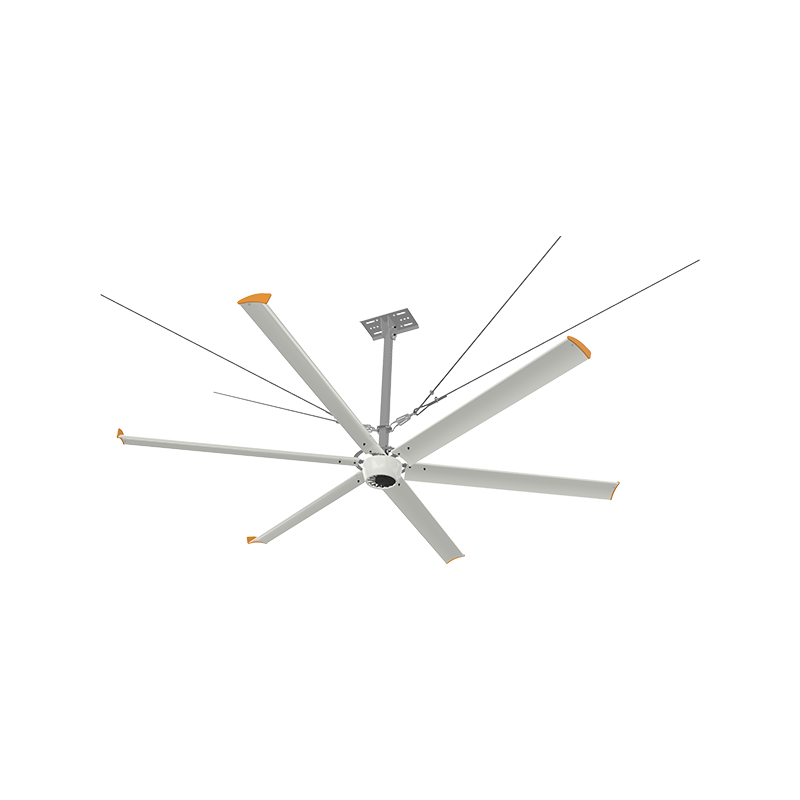
The 15-foot Even Airflow Industrial BLDC Ceiling Fan utilizes a high-efficiency BLDC motor and carefully designed blades. This ceiling fan operates with extremely low noise levels, making it suitable ...
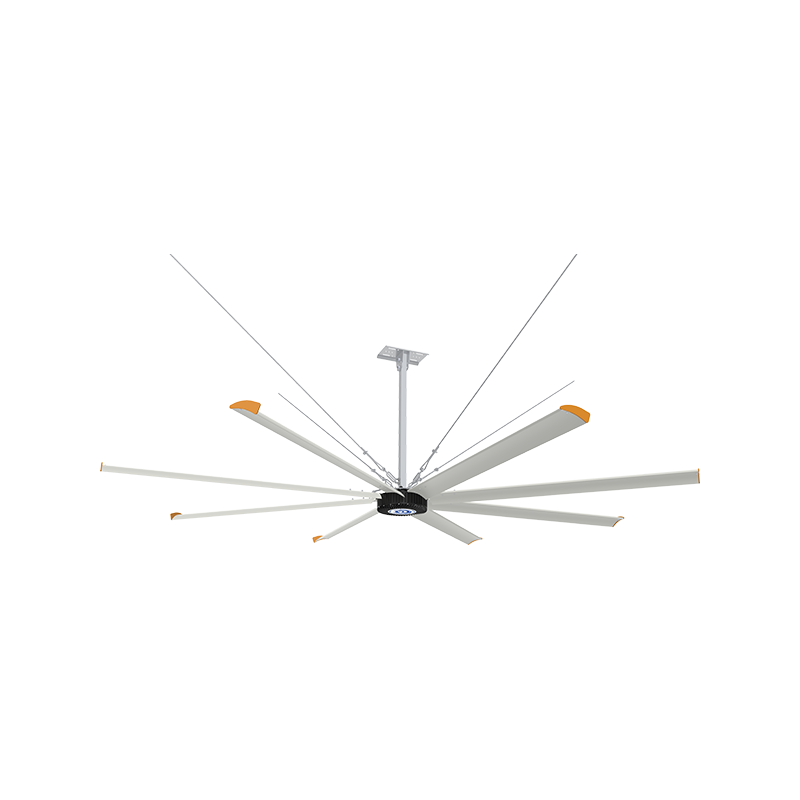
The 8-foot HVLS Large Industrial BLDC Ceiling Fan is equipped with a 0.3KW brushless DC motor, offering higher energy efficiency and lower noise levels. The lower power consumption design helps users ...

This 20-foot diameter aviation-grade metal blade warehouse HVLS large ceiling fan is equipped with six aviation-grade metal blades, with a diameter of 20 feet (approximately 6.1 meters), effectively c...
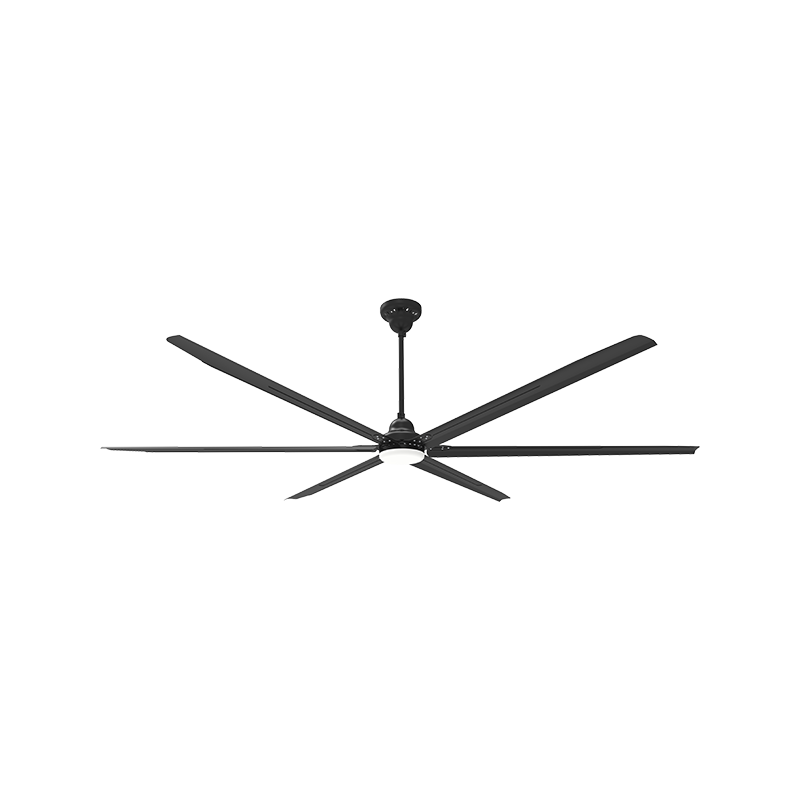
1. Core Technology: High Volume, Low SpeedNatural Breezes: Unlike the “harsh” wind from small fans, HVLS fans use massive blades rotating at low speeds to create a large-scale, three-dimensional breez...
1. Massive 9-Foot WingspanWith a colossal 108-inch (2.8m) diameter and 6 high-efficiency streamlined blades, this fan moves massive volumes of air even at low speeds. It is the perfect solution for el...
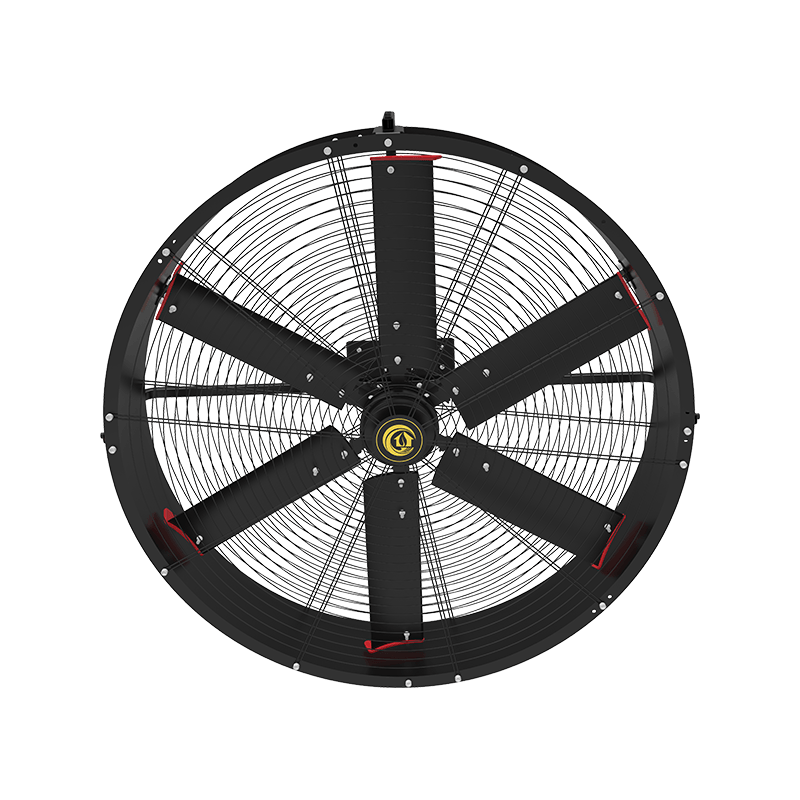
1. Extreme Airflow & Wide CoverageEquipped with massive 79-inch (2.0m) diameter aerospace-grade aluminum alloy blades. These precision-balanced blades generate a powerful, stable laminar airflow t...
Big Fans, Low Speed, Real Results: HVLS Industrial Fans Explained When a factory floor hits 34°C, small fans only move hot air around. Large-diameter HVLS ceiling fans do the opposite: they push a t...
READ MOREStanding on the floor of a 6,000-square-metre factory on a hot July afternoon, you quickly notice the problem: small ceiling fans running at full speed create noisy air pockets near the floor, while ...
READ MORESpecifying industrial air movement The HVLS Ceiling Fan Isn’t a Big Ceiling Fan. Sizing, motor selection, and mounting height have to work together before a large industrial space can feel genuinely...
READ MOREAt a distribution center in a hot climate, the worst heat gathers near the loading dock. The bay doors stay open through most of the shift, so any air that moves toward the dock gets pulled outside b...
READ MORE Custom Large Industrial Fans Manufacturers